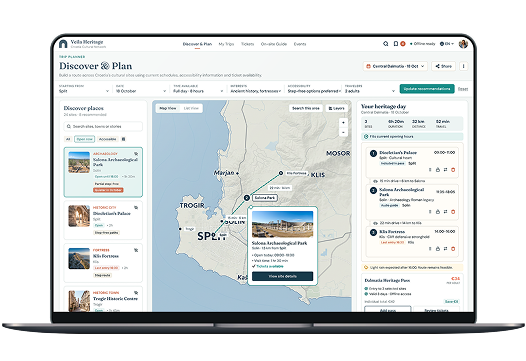
The client is a Croatia-based heritage network managing 24 castles, archaeological sites, museums, historic buildings, and cultural routes. Each site had its own visitor information, ticketing, content, and reporting workflows, making it difficult to build a consistent experience across the network.
The organization needed a unified digital experience platform for discovery, route planning, booking, multilingual content, accessibility information, and visitor data. Computools built Veila Heritage as a destination management platform that connected these workflows while keeping local teams in control of their content, schedules, capacity, and ticket products.
The visitor engagement platform gave travelers one place to discover sites, plan multi-site visits, buy tickets, and access content during their trip. It also gave the network a clearer view of visitor behavior across destinations and helped smaller sites attract more off-season demand.
The client coordinates heritage attractions with different visitor volumes, ticketing models, operating schedules, and levels of digital maturity. High-profile coastal attractions draw strong seasonal demand, while smaller inland sites rely more heavily on cultural routes and destination campaigns to reach visitors.
The network used local websites, booking tools, printed materials, audio guides, spreadsheets, and site-specific cultural tourism software. Opening hours, events, accessibility details, ticket information, translations, and historical content were maintained separately by individual institutions.
This made the digital visitor experience inconsistent across destinations. The network needed common standards for discovery and visitor information without taking editorial or operational control away from local teams.
The main challenge was fragmentation across visitor-facing services and internal content operations.
The project required heritage tourism software development experience across cultural content, visitor journeys, geospatial planning, accessibility, ticketing, and offline use.
It also needed travel and hospitality software development capabilities for multi-site integrations, visitor-facing commerce, analytics, and phased operational rollout.
Computools combined web development with geospatial services, booking integrations, offline access, and content workflows to build Veila Heritage as a mobile-ready platform for travelers and heritage teams. A shared data model brought sites, events, routes, tickets, accessibility information, and visitor content into one system while keeping content management under each institution’s control. Travelers could discover sites, build itineraries around their interests and available time, save routes, and adjust plans as schedules or travel conditions changed.
Itinerary planning helped travelers build multi-site routes based on their interests, available time, location, opening hours, and accessibility needs.
Online ticket booking connected admission, timed entry, cross-site passes, events, donations, and memberships with trip planning, so travelers could move from discovery to purchase without switching between separate systems.
A mobile-ready multilingual visitor guide combined text, audio, maps, QR content, accessibility information, and saved materials. Routes, tickets, and essential content remained available offline.
A tourism content management system gave curators, translators, marketers, and local teams one place to manage stories, translations, media rights, events, opening information, and accessibility data, with approval controls for published content.
Computools applied AI development to itinerary ranking, content recommendations, demand analysis, and visitor segmentation. Recommendations considered interests, trip duration, seasonality, location, capacity, and accessibility while keeping destination teams in control of promoted content.
Veila Heritage improved visitor distribution, advance booking, content operations, and cross-site engagement across the network:
Route planning and themed discovery increased visibility for smaller sites and helped distribute visits beyond the best-known attractions. Travelers could combine locations around shared themes, events, distance, and available time instead of planning each stop separately. Integrated booking eased the move from discovery to purchase, while centralized content workflows cut duplicate updates across languages and channels.
Shared destination analytics connected discovery, itinerary activity, bookings, engagement, and revenue. Teams could see which routes generated cross-site visits, where planning dropped off, which destinations needed more promotion, and which content contributed to bookings or longer engagement.
The project required experience across multi-site content governance, geospatial discovery, ticketing integrations, multilingual publishing, accessibility, offline mobile use, visitor consent, and portfolio analytics.
Computools brought together business analysis, CX and UX design, content architecture, geospatial data modeling, recommendation logic, system integrations, QA, accessibility validation, cloud delivery, content migration, and rollout support.
Delivery priorities were tied to measurable outcomes such as off-season distribution, route engagement, booking conversion, content freshness, offline reliability, visitor value, and adoption across participating sites.

The design focused on cultural discovery, practical trip planning, multilingual accessibility, offline use, and clear operational tools for site teams.
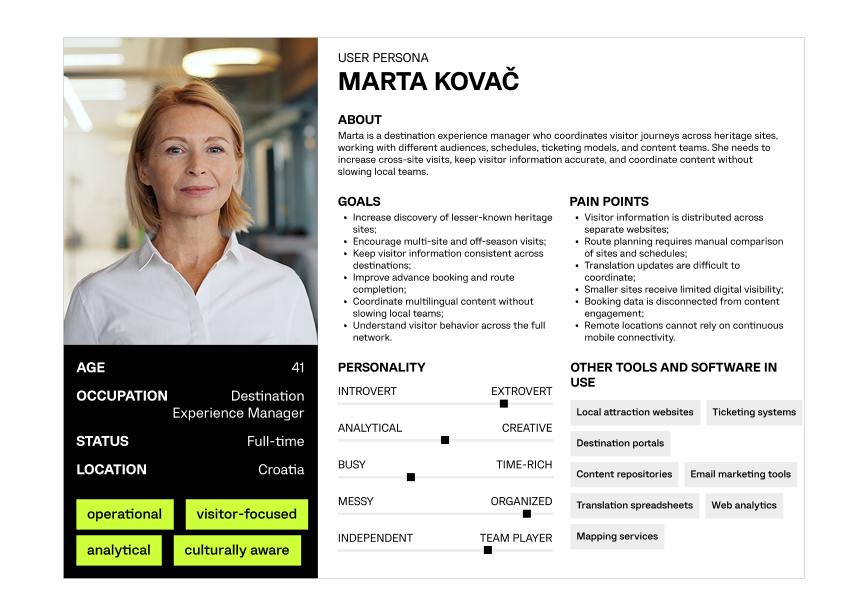
Defining the needs of destination managers and heritage teams responsible for visitor journeys, content accuracy, and cross-site coordination.
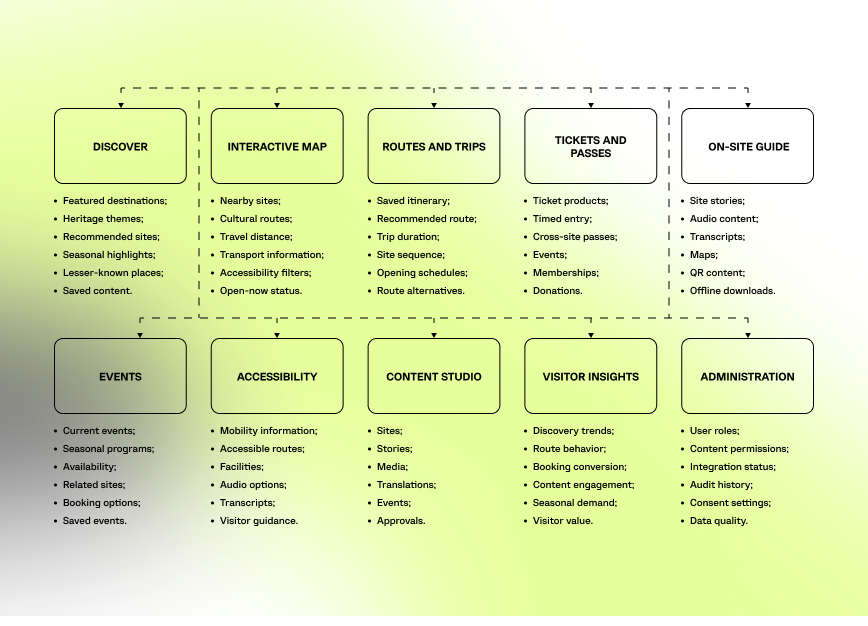
Structuring discovery, routes, tickets, on-site guidance, accessibility, content operations, and visitor insights within one connected platform.
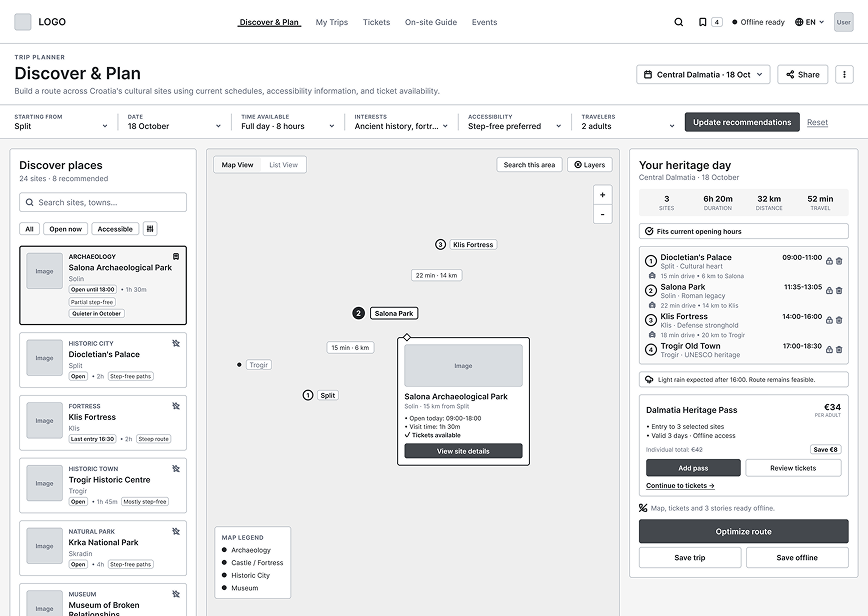
Testing key flows for route planning, ticket purchase, offline access, multilingual content, and staff content management before UI design.
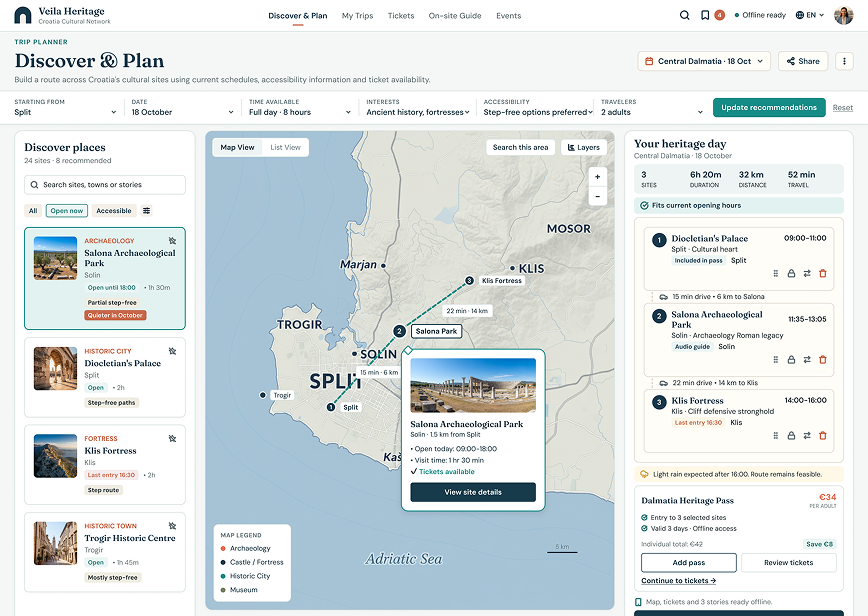
Creating a responsive visitor and staff experience with synchronized maps, routes, tickets, accessibility information, and offline content.

TypeScript
TypeScript supported frontend and backend development across visitor journeys, content workflows, booking interactions, geospatial data, permissions, and integrations.

Next.js and React
Next.js and React powered responsive discovery, planning, booking, and administration interfaces. PWA functionality supported saved routes, offline content, tickets, QR entry points, and synchronization once connectivity was restored.

Node.js and NestJS
Node.js and NestJS handled application logic, content workflows, permissions, notifications, and booking coordination. REST APIs, webhooks, and scheduled data pipelines connected ticketing, event, mapping, payment, CRM, and local content systems.

PostgreSQL and PostGIS
PostgreSQL stored site, story, event, ticket, visitor, consent, and engagement data. PostGIS supported location-aware discovery, route relationships, proximity queries, and geospatial filtering.

Python and FastAPI
Python and FastAPI supported itinerary ranking, content recommendations, demand analysis, visitor segmentation, and related analytical services.

AWS, Docker, and Terraform
AWS, Docker, and Terraform supported cloud deployment, consistent environments, infrastructure automation, monitoring, media delivery, and scalable processing.
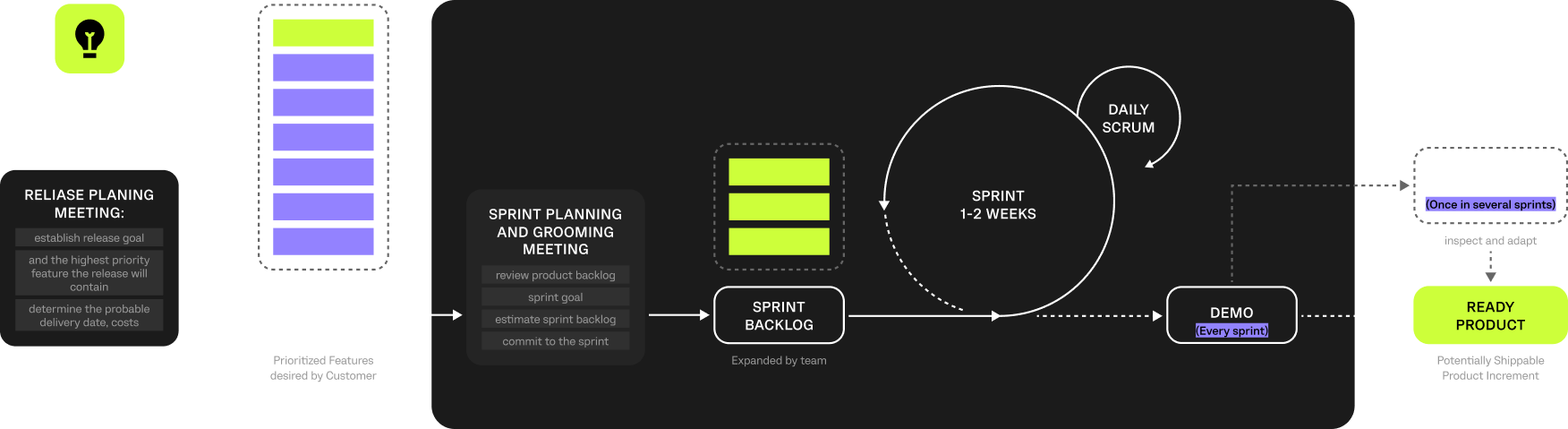
Computools used two-week Scrum iterations with regular validation by visitors and staff, and measurable acceptance criteria. Each sprint tied delivery to outcomes such as route engagement, booking conversion, content completeness, offline reliability, accessibility compliance, and content update time.
Early iterations validated the shared heritage data model, core visitor journeys, content workflows, and integration readiness with pilot-site teams.
Later sprints focused on booking integrations, offline synchronization, recommendation quality, analytics, accessibility, and release readiness. Curators, destination marketers, site managers, visitor-services teams, and accessibility representatives participated in reviews before each rollout stage.
Before Veila Heritage, each site worked almost on its own. Visitors had to plan every stop separately, and our teams were constantly switching between different tools. Now people can build one trip across several locations, and we have a much clearer way to manage content, bookings, and visitor information.




Computools | 341 Raven Cir, Camden Wyoming, Delaware 19934, US