
THE AUTHOR:

Port automation is rapidly redefining how container terminals operate, enabling ports to increase throughput, reduce operational costs, and enhance overall efficiency. As part of the ongoing digital transformation in ports, many companies are investing in modern port operations automation technology and partnering with providers of logistics software development services to upgrade their systems.
Global trade continues to expand, with containerized cargo playing a dominant role in international logistics. According to Statista, global container throughput has exceeded 850 million TEUs and is projected to grow steadily in the coming years. This surge puts immense pressure on port infrastructure, requiring faster and more scalable solutions, including automated container terminal technologies.
Additional industry insights from UNCTAD confirm that maritime trade volumes continue to grow, reinforcing the need for smarter and more efficient port operations.
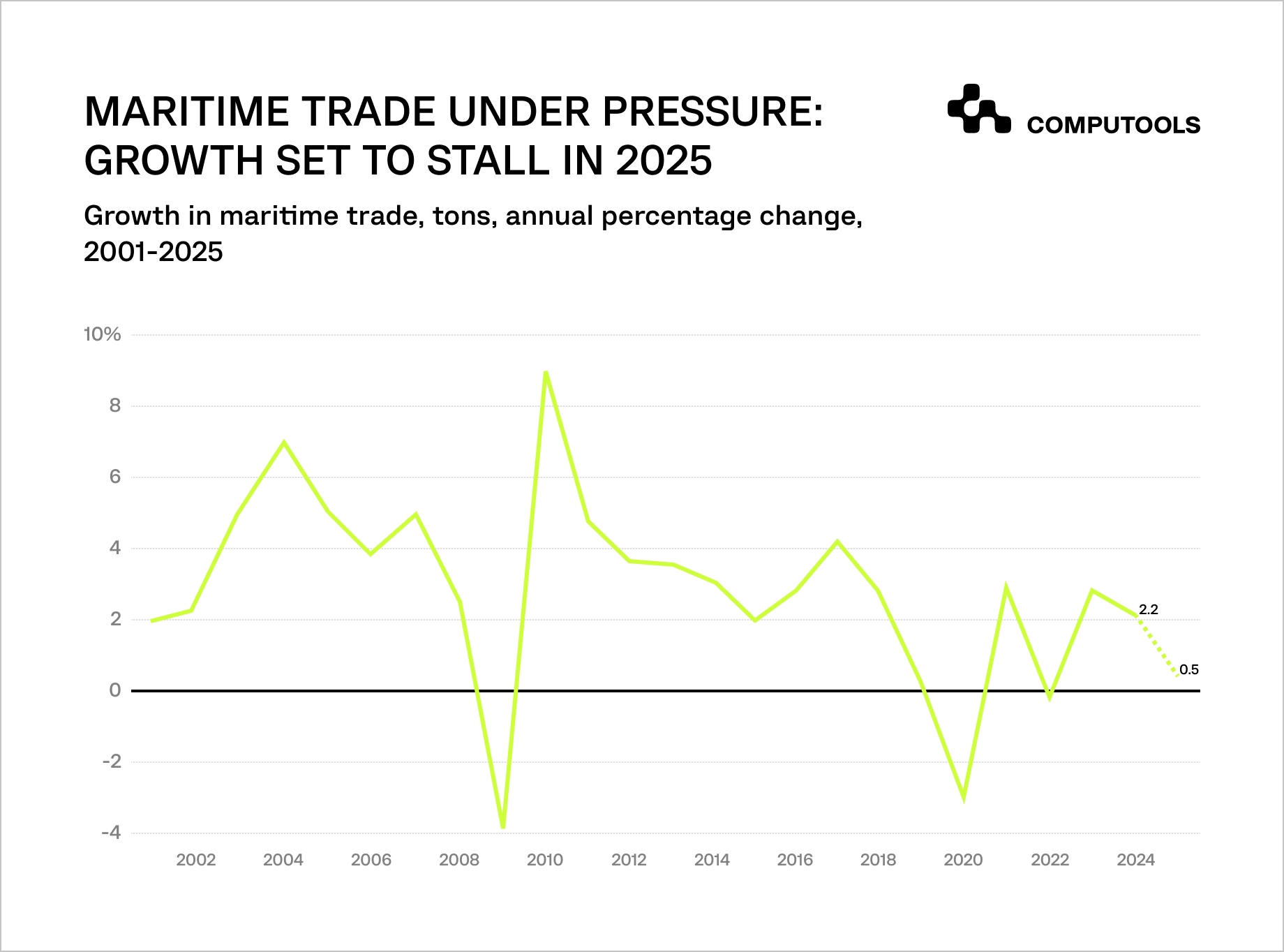
At the same time, research by McKinsey & Company shows that automation can increase port productivity by 10–35% while significantly reducing operational costs, especially when combined with AI and IoT in port automation.
Traditional approaches are no longer sufficient. Ports must adopt advanced technologies and scalable systems to remain competitive and handle increasing demand. For decision-makers such as CTOs, COOs, and Heads of Engineering, the key challenge is implementing reliable, future-ready solutions that integrate seamlessly and deliver measurable ROI.
Why port automation is becoming a necessity
1. Growing Complexity of Global Logistics
Modern supply chains are becoming increasingly complex due to globalization, the rapid growth of e-commerce, and rising customer expectations. Ports are now required to handle significantly higher cargo volumes while maintaining speed, accuracy, and full operational transparency.
This shift is driving demand for smart port solutions, port logistics software solutions, and scalable port operations management software that can support real-time decision-making across global supply chains.
2. Limitations of Traditional Port Operations
Conventional container terminals face several critical challenges:
- Manual processes that slow down operations
- High dependency on human labor
- Increased risk of operational errors
- Limited real-time visibility
- Rising operational and maintenance costs
These limitations highlight the need for modernization through port terminal automation systems and advanced container terminal management software.
Companies increasingly turn to logistics software development services to replace fragmented legacy systems with integrated platforms that improve efficiency and visibility.
3. Business Impact of Inefficiencies
Delays in port operations can result in:
- Increased demurrage and detention costs
- Supply chain disruptions
- Loss of competitive advantage
According to industry research from the World Bank, port inefficiencies can increase logistics costs by up to 20–25% in developing supply chains, significantly affecting global trade competitiveness.
4. Automation as a Strategic Solution
By implementing port operations automation technology, ports can:
- Improve turnaround time for vessels
- Increase yard productivity
- Enhance safety and compliance
- Reduce operational expenses
This transformation is a core element of digital transformation in ports and a foundation for long-term scalability, especially when supported by AI and IoT in port automation and modern smart port infrastructure technology.
Organizations often accelerate this transition through custom software engineering, IoT development services, and AI development services, enabling fully integrated ecosystems tailored to terminal needs.
Automated equipment in container terminals
The physical layer of automated container terminal technologies plays a crucial role in modern port infrastructure, enabling high-performance and scalable operations.
1. Automated Guided Vehicles (AGVs)
AGVs are self-driving vehicles used to transport containers across the terminal. They operate with high precision and efficiency, reducing reliance on manual labor and improving operational flow within automation software for container terminals environments.
Key benefits:
- Continuous 24/7 operation
- Reduced fuel and labor costs
- Increased safety
2. Automated Stacking Cranes (ASC)
ASCs automate container stacking and retrieval in storage yards. These robotic systems significantly increase storage density and speed while integrating with port terminal automation systems for centralized control.
3. Robotic Cranes and Smart Handling Systems
Advanced cranes use sensors, cameras, and automation algorithms to optimize loading and unloading operations. These systems are a core part of automated cargo handling systems, enabling precise and efficient container movement.
These automated cargo handling systems deliver:
- Faster container processing
- Reduced human error
- Improved resource utilization
Automation at this level ensures consistent performance and scalability across terminal operations. Combined with maritime logistics automation and port logistics software solutions, it enables ports to transition toward fully integrated digital ecosystems.
Additionally, adoption is often supported by maritime software development services, ensuring that hardware automation is tightly connected with enterprise-grade software platforms.
IoT and real-time monitoring systems
The integration of AI and IoT in port automation enables more intelligent, connected, and data-driven operations that significantly improve visibility across the entire logistics chain.
1. Smart Sensors and Tracking
IoT devices provide continuous real-time tracking of critical port assets, including:
- Containers moving through terminals
- Equipment such as cranes, trucks, and AGVs
- Environmental conditions like temperature, humidity, and vibration
This level of monitoring improves cargo safety, reduces loss risks, and ensures compliance with strict storage and transportation requirements. In modern ecosystems such as smart port solutions, this becomes a foundational capability for operational reliability.
2. Predictive Maintenance
IoT-enabled systems continuously monitor the health of port equipment and infrastructure. By analyzing sensor data, these systems can predict potential failures before they occur, allowing maintenance teams to act proactively.
This reduces unexpected downtime, extends asset lifespan, and significantly lowers maintenance costs. Such capabilities are often embedded into smart port infrastructure technology to ensure long-term operational stability.
3. Enhanced Visibility and Control
Real-time dashboards consolidate operational data into a unified view, providing:
- Full transparency across port activities
- Faster and more accurate decision-making
- Rapid response to disruptions or delays
These capabilities are essential for port operations management software and modern port automation technologies improving efficiency in container terminals, where speed and precision directly impact throughput and profitability.
Artificial intelligence for port optimization
Artificial intelligence plays a central role in transforming maritime logistics into a highly automated and optimized ecosystem.
1. AI in Vessel and Yard Planning
AI algorithms are used to optimize complex operational processes such as tracking of vessel loading and unloading sequences, as well as yard space allocation. This reduces congestion at terminals, minimizes delays, and improves overall throughput efficiency.
These capabilities are increasingly embedded in container terminal management software and modern port management software development solutions.
2. Route Optimization Inside Terminals
Within port terminals, AI dynamically optimizes routes for automated guided vehicles (AGVs), cranes, and other equipment. By minimizing idle time, reducing travel distance, and improving coordination, ports achieve lower fuel consumption and higher operational efficiency.
3. Advanced Data Analytics
AI-powered analytics systems process large volumes of operational data to identify:
- Bottlenecks in cargo flow and terminal operations
- Inefficiencies in resource utilization
- Opportunities for performance optimization and cost reduction
These insights strengthen port operations management software and support continuous operational improvement across the entire logistics chain.
4. Business Outcomes
The implementation of AI-driven systems delivers measurable improvements in:
- Operational efficiency and throughput
- Decision-making accuracy based on real-time data
- Cost optimization across port activities
Overall, these technologies reinforce the evolution of smart port solutions and accelerate the adoption of logistics business process automation, including services like logistics software development services and advanced automation frameworks for global supply chains.
AI is already enhancing dispatching, tracking, and communication processes. Comparable automation approaches are also applied in maritime logistics, as explored in our article AI Agents in Maritime Logistics: Automating Vessel Operations, Cargo Monitoring, and Dispatch Decisions.

Want to move more containers with fewer delays, lower labor costs, and less operational chaos? Talk to our team to estimate your port automation project.
Terminal operating systems and integration
Modern ports cannot function efficiently without a powerful digital backbone such as container terminal management software. These systems act as the central coordination layer for all terminal activities, enabling seamless control, optimization, and real-time synchronization of complex port operations.
1. Role of Terminal Operating Systems (TOS)
TOS serve as the core control hub of port operations. They unify and manage critical workflows, including:
- vessel loading and unloading operations
- yard management and container storage optimization
- coordination of equipment such as cranes, trucks, and automated vehicles
By centralizing these processes, port operations management software significantly improves planning accuracy, reduces idle time, and ensures more efficient utilization of port resources.
2. Integration with Enterprise Systems
Modern TOS platforms are designed to integrate seamlessly with broader enterprise ecosystems, including:
- ERP systems
- logistics management platforms
- customs and regulatory systems
This integration ensures uninterrupted data exchange across the entire supply chain, enabling better coordination between shipping lines, terminal operators, and regulatory authorities.
3. Cloud Technologies and APIs
Cloud-based infrastructure has become a key enabler of scalable and resilient port systems.
It provides:
- high scalability to handle growing operational demands
- real-time access to operational data from any location
- enhanced system reliability and security
At the same time, APIs connect disparate systems into a unified digital environment. This interoperability is essential for modern port terminal automation systems and advanced port logistics software solutions, allowing ports to operate as fully integrated digital ecosystems.
Why choose Computools for port automation
Developing effective port management software development solutions requires not only strong technical expertise but also deep domain knowledge of maritime and logistics operations. This combination is essential for building systems that deliver real operational value.
1. Expertise and Capabilities
Computools brings deep expertise in delivering complex digital solutions for the logistics and maritime industries, combining strong engineering capabilities with domain-specific knowledge to ensure scalable, high-quality outcomes.
With 12+ years of experience in software engineering and 40+ successfully delivered logistics projects worldwide, the company has built a proven track record of creating efficient, reliable, and future-ready systems tailored to industry needs. This is further reinforced by its strong client satisfaction, reflected in a 4.9 Clutch rating based on 90+ reviews.
Key areas of expertise include:
- logistics software development services
- maritime software development services
- advanced IoT development services
- AI-driven innovation through AI development services
2. Custom Software Solutions
Computools builds tailored digital solutions designed specifically for port and logistics organizations, including:
- custom port management platforms
- real-time cargo tracking systems
- fleet and terminal management solutions
This expertise is backed by real-world delivery. For a major Western European rail operator, Computools developed an IoT-based wagon monitoring system that enabled real-time tracking of cargo location and safety parameters – eliminating the need for frequent manual inspections and ensuring 24/7 operational visibility.
For LOCARGO, a Texas-based B2B trucking platform, the team built an integrated IoT and AI-powered logistics solution that helped the client grow revenue fivefold in just two years by optimizing route planning, capacity utilization, and driver productivity.
In the maritime sector, Computools delivered a Shipbuilding Management App for an English ship services company, integrating blockchain-based data security, multi-user role management, and analytics tools – resulting in measurable gains in throughput, productivity, and revenue.
These systems help organizations increase operational efficiency, improve visibility, and reduce operational costs.
3. End-to-End Development
The company provides full-cycle software development services, including:
- IT consulting and system architecture design
- development and system integration
- ongoing maintenance and optimization
This end-to-end approach ensures long-term stability, scalability, and adaptability of the solutions.
4. Business Process Optimization
Through logistics business process automation, Computools helps organizations streamline repetitive workflows, reduce manual errors, and improve overall operational performance. As a result, ports and logistics operators achieve faster, more accurate, and more cost-efficient operations in increasingly competitive global markets.
Key takeaways
The transformation of container terminals through automation is already well underway, and the gap between early adopters and those still relying on legacy systems continues to widen with every passing year. What was once considered a long-term strategic aspiration has become an immediate operational necessity. Ports that fail to modernize risk falling behind not only in throughput capacity, but in their ability to attract shipping lines, meet regulatory requirements, and deliver the level of service that global trade partners increasingly expect.
From automated cargo handling equipment and IoT-powered real-time monitoring to AI-driven planning algorithms and cloud-integrated terminal operating systems, modern ports are evolving into fully connected digital ecosystems. Each layer of this transformation reinforces the others – smarter equipment feeds better data, better data enables more accurate AI decisions, and integrated software platforms ensure that every part of the operation moves in sync. The result is a terminal that is not just faster, but fundamentally more resilient, transparent, and scalable.
Yet technology alone does not guarantee success. The complexity of port environments – with their diverse stakeholders, legacy infrastructure, regulatory frameworks, and round-the-clock operational demands – means that implementation matters just as much as innovation. Deploying the right solution in the wrong way can introduce new inefficiencies rather than eliminate existing ones. This is why the choice of implementation partner is one of the most consequential decisions a port operator or logistics organization can make.
Success in this environment demands a partner with deep domain knowledge across both maritime and logistics operations, proven engineering capability across IoT, AI, and enterprise software integration, and a genuine commitment to long-term collaboration rather than one-time delivery. It requires a team that understands not only how to build complex systems, but how those systems will be used by real operators under real conditions – and how they need to evolve as the business grows.
Computools brings all of this together. With a strong track record in delivering tailored digital solutions for logistics and maritime clients, the company combines technical excellence with industry-specific expertise to help organizations build the intelligent IT infrastructure they need.
Whether the goal is deploying a real-time cargo tracking system, automating terminal workflows, or integrating a full-scale port management platform, Computools provides the end-to-end capabilities – from consulting and architecture design through development, integration, and ongoing optimization – to turn ambitious digital transformation goals into measurable operational results.
For ports and logistics operators ready to take that step, the opportunity is clear. The technologies exist, the business case is proven, and the competitive pressure is real. The organizations that act decisively today are not simply solving the operational challenges of the present – they are building the foundation for sustainable growth, market leadership, and long-term resilience in an increasingly demanding and competitive global trade environment.
If you’re exploring ways to modernize your operations with port automation and enhance efficiency in your container terminal, reach out to our team at info@computools.com to discuss your goals and get a tailored project estimate.
Selecting the right partner plays a critical role in ensuring AI and automation technologies are smoothly and reliably integrated into everyday port operations. In our article, Top 20 Maritime Software Development Companies Globally, we highlight the most relevant providers in this space.
Computools
Software Solutions
Computools is an IT consulting and software development company that delivers innovative solutions to help businesses unlock tomorrow.