Background
Before the project, the client’s fraud and KYC operations depended on a combination of legacy rules, manual checks, and separate tools used by risk and compliance teams. Fraud analysts had to review a high volume of alerts, many of which turned out to be false positives. KYC analysts handled document verification, liveness checks, sanctions screening, and case review, but there were too many manual steps. This slowed onboarding and increased pressure on internal teams.
The client needed a platform that could integrate fraud detection, KYC verification, AML checks, case management, and audit reporting into a single, controlled environment.
Approach to solution
Computools approached the project as a real-time risk-monitoring and compliance-automation platform, focusing on transaction monitoring, customer verification, risk decisioning, and case review.
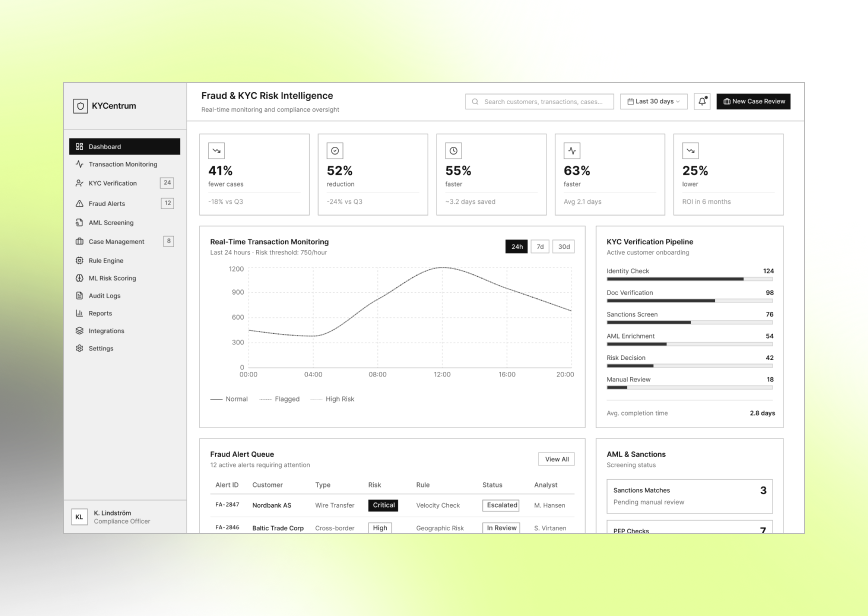
The team structured the system to process live data, apply configurable rules, integrate with KYC and AML services, and give analysts clear context for every flagged transaction or customer profile. UX design was critical for the platform: compliance teams needed fast access to risk signals, case history, verification results, and explainable decision logic without digging through disconnected tools.
Computools role
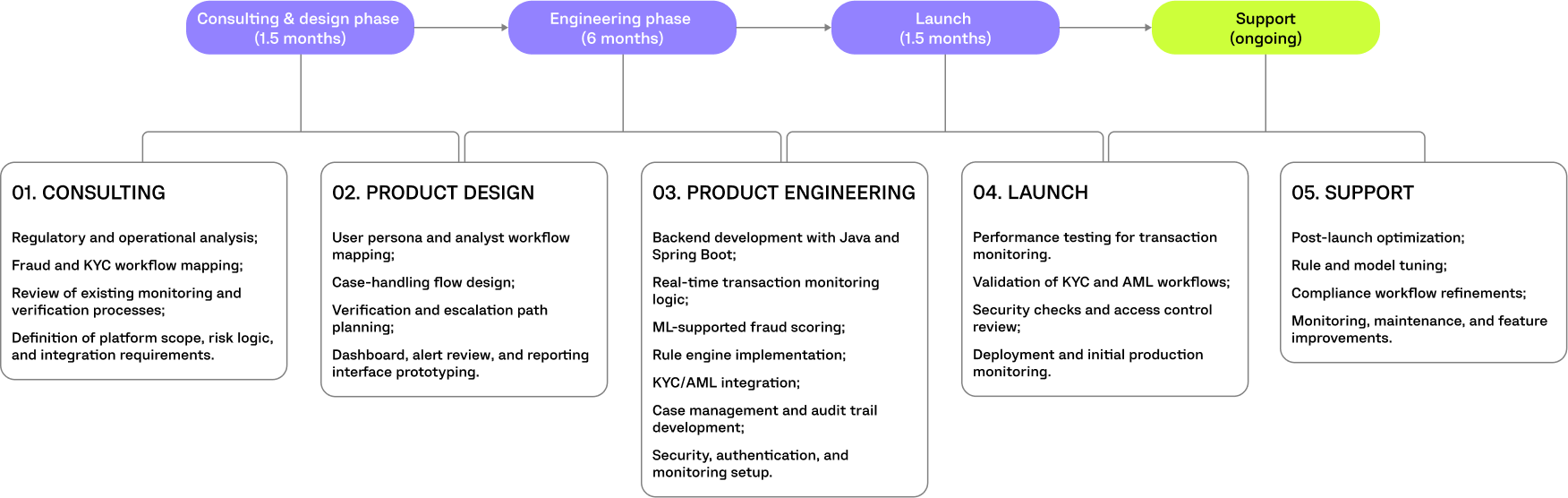
Computools contributed to backend development, integration logic, workflow automation, and platform architecture.
The team worked on:
- backend services for fraud and KYC workflows;
- transaction monitoring logic;
- API orchestration between internal systems and external verification services;
- rule-based decision workflows;
- case management functionality;
- audit trail and reporting logic;
- secure data handling for sensitive customer and transaction information;
- integration support for monitoring and operational visibility.
Key decisions and outcomes
The platform was built around a hybrid decision model that combined ML-supported fraud scoring with transparent rule-based logic. This gave compliance teams automated risk detection without losing explainability.
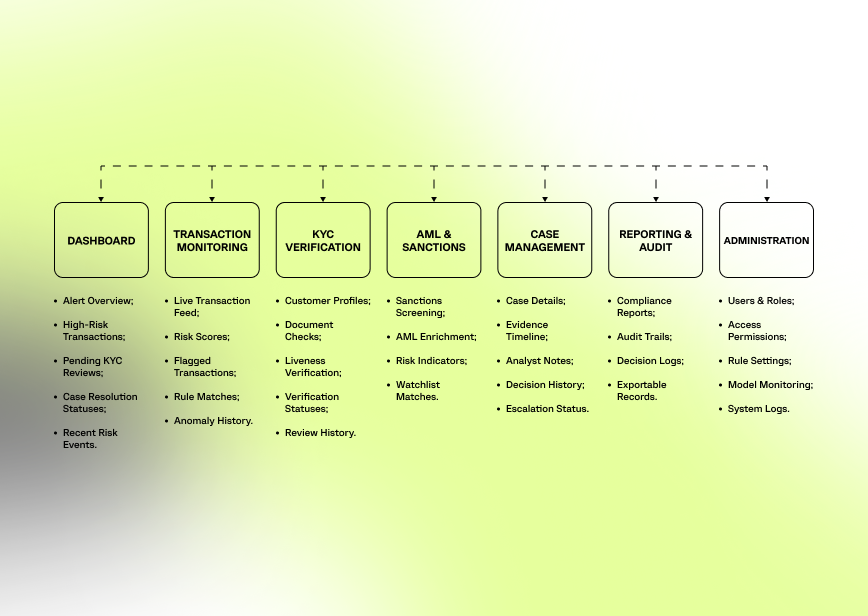
Fraud alerts, KYC checks, sanctions screening, AML enrichment, and case review were integrated into a single operational flow. QA testing covered performance, rule logic, verification workflows, and audit trail consistency before launch.
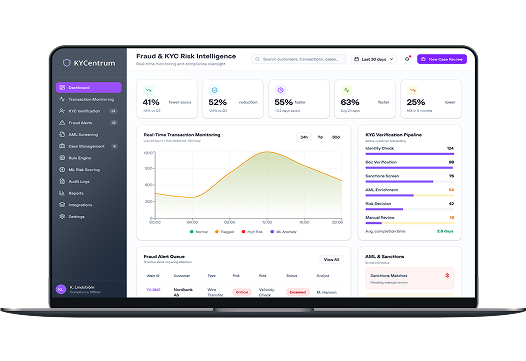
As a result, the client reduced confirmed fraud cases by 41%, lowered false positives by 52%, shortened onboarding time by 50–60%, and improved case resolution speed by 63%.