Background
The client managed large-scale logistics hub and distribution center construction projects across complex multi-stakeholder environments.
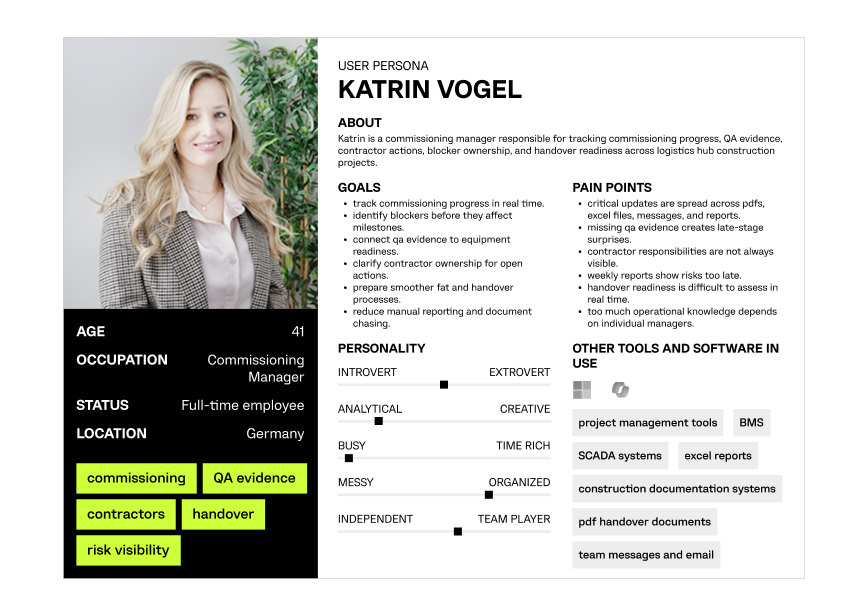
Each project involved commissioning teams, QA/QC specialists, project managers, site supervisors, contractors, engineers, and client-side stakeholders. These teams depended on many tools and documents, including Microsoft 365, project management systems, BMS, SCADA, construction documentation systems, Excel files, PDFs, messages, and operational reports.
The company already had digital tools in place, but critical operational knowledge was still fragmented. Commissioning status, QA evidence, blockers, contractor actions, supervisor approvals, and handover readiness were not always available as structured records.
This created delays in visibility. Risks often became clear only when they reached weekly reports, which was too late for teams preparing for commissioning milestones, Factory Acceptance Testing, or project handover.
Approach to solution
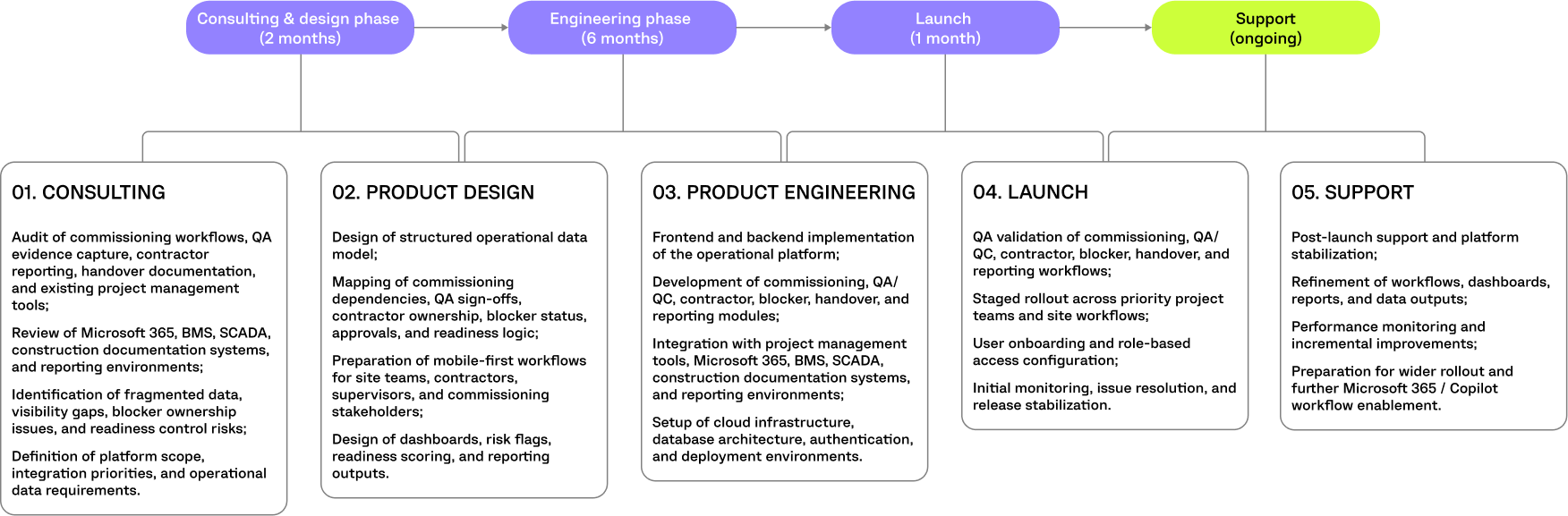
Computools started by auditing commissioning workflows, QA evidence capture, contractor reporting, handover documentation, and existing project management tools.
The team mapped how commissioning dependencies were tracked, how QA evidence was collected, how contractor actions were reported, how supervisors approved site progress, and how handover readiness was assessed.
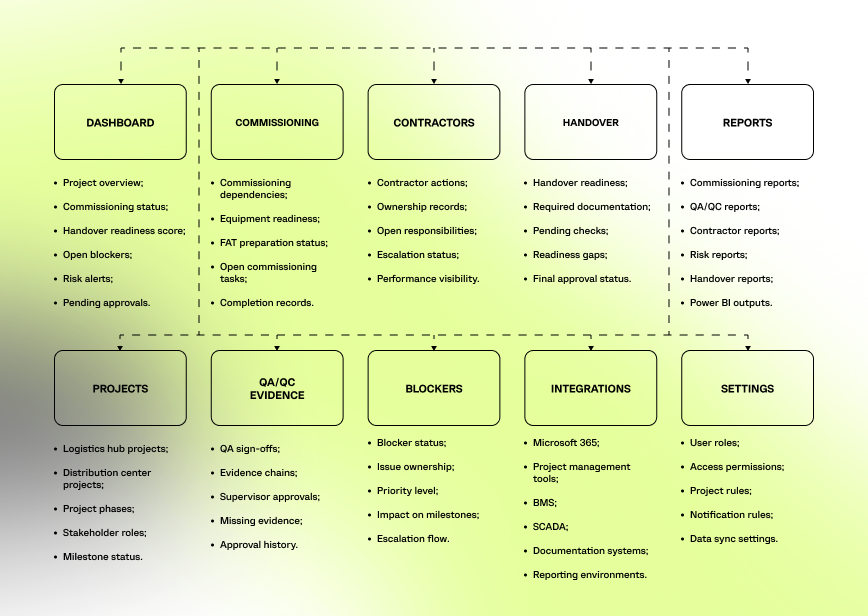
Based on this analysis, Computools designed a structured operational data model. It covered commissioning dependencies, QA sign-offs, contractor ownership, blocker status, supervisor approvals, and readiness scoring.
The solution was designed as a mobile-first system so site teams, contractors, supervisors, and commissioning stakeholders could capture structured data directly from the field.
Computools then connected the platform with the client’s project management tools, Microsoft 365, BMS, SCADA, documentation systems, and reporting environments.
Computools role
Computools was responsible for:
- auditing commissioning, QA/QC, contractor, handover, and reporting workflows;
- defining the structured operational data model;
- designing user roles and access permissions;
- building mobile-first data capture workflows;
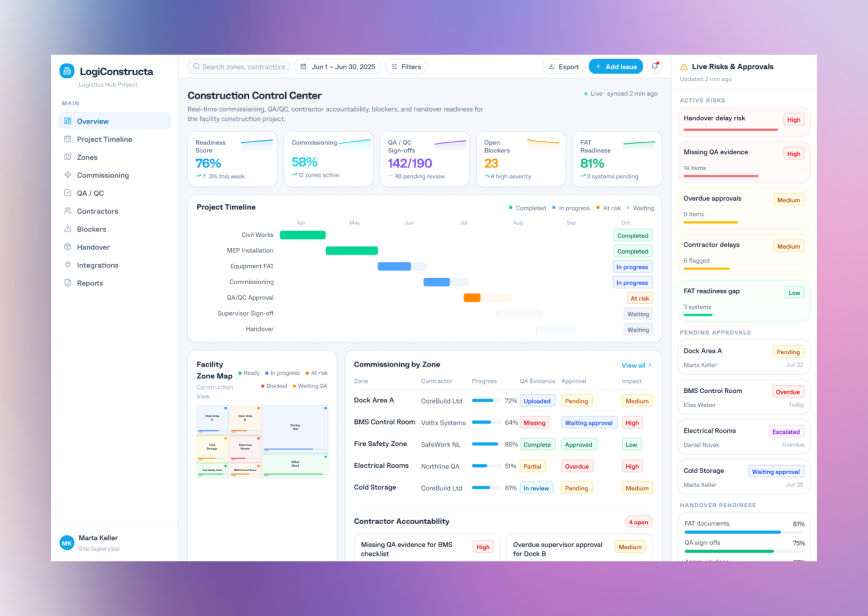
- implementing dashboards, risk flags, and readiness scoring;
- connecting project tools, Microsoft 365, BMS, SCADA, documentation systems, and reporting environments;
- preparing structured data outputs for Microsoft 365 and Copilot workflows;
- testing user scenarios across site, commissioning, QA/QC, and management roles;
- supporting launch and post-launch stabilization.
Key decisions and outcomes
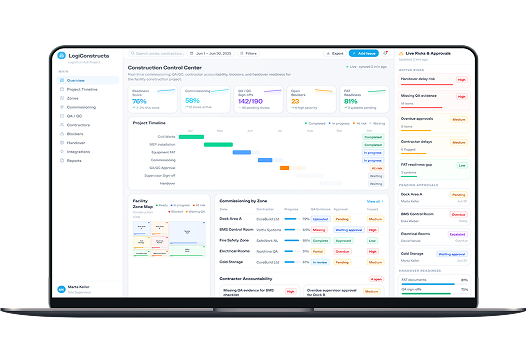
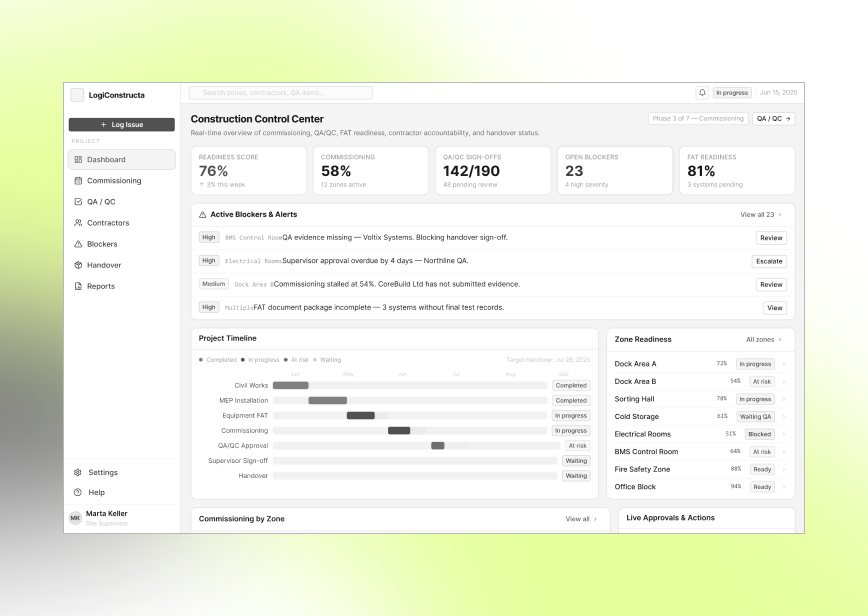
The platform was built around structured operational records. This allowed the client to capture commissioning status, QA sign-offs, blockers, approvals, contractor actions, and readiness indicators in a format that could be tracked, filtered, and analyzed.
Mobile-first workflows were prioritized because many key updates came directly from site teams, supervisors, contractors, and commissioning stakeholders.
Another key decision was to connect the platform to the client’s existing systems rather than replace them. This allowed Microsoft 365, Copilot, project management tools, BMS, SCADA, documentation systems, and reporting environments to work with cleaner operational data.
As a result, project and commissioning teams received earlier visibility into risks, clearer contractor accountability, and better control over handover readiness.