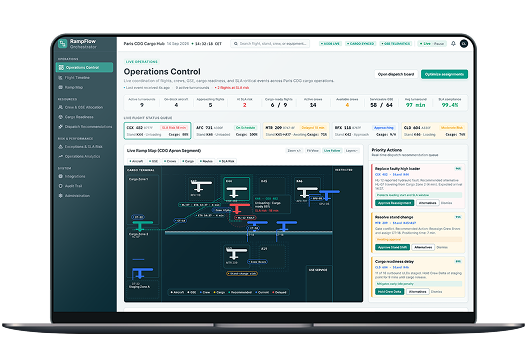
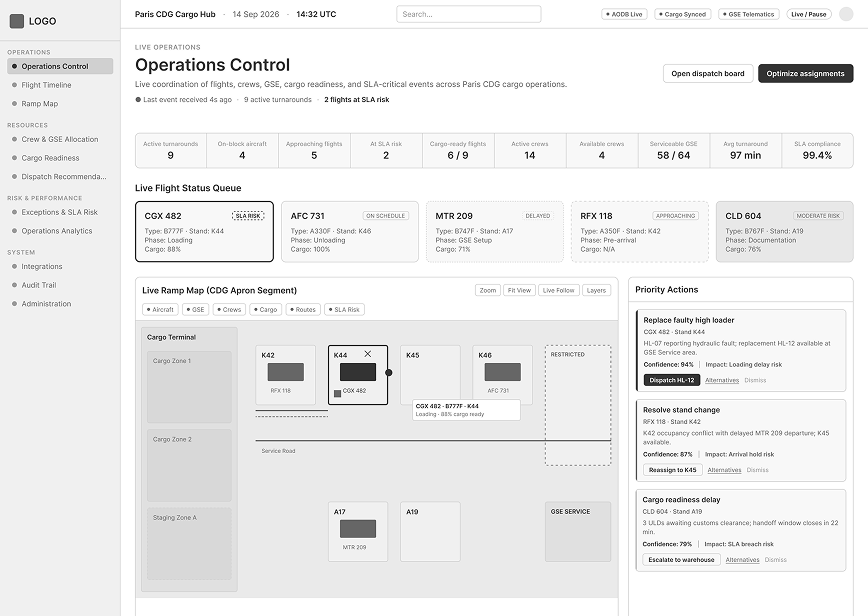
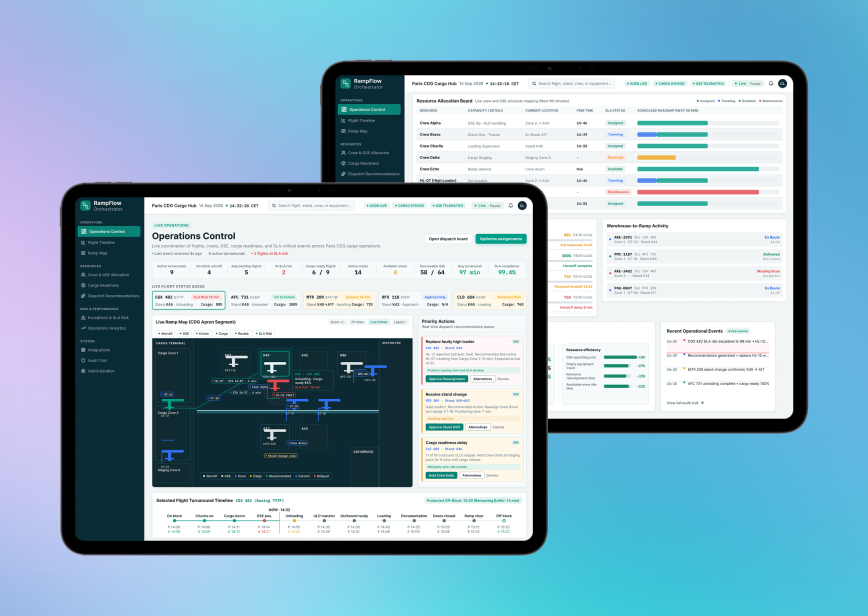
Computools built RampFlow Orchestrator as a live dispatch layer for cargo ramp operations. It kept flight updates, cargo readiness, stand assignments, crew status, Ground Support Equipment locations, and airside travel times in the same dispatcher workspace.
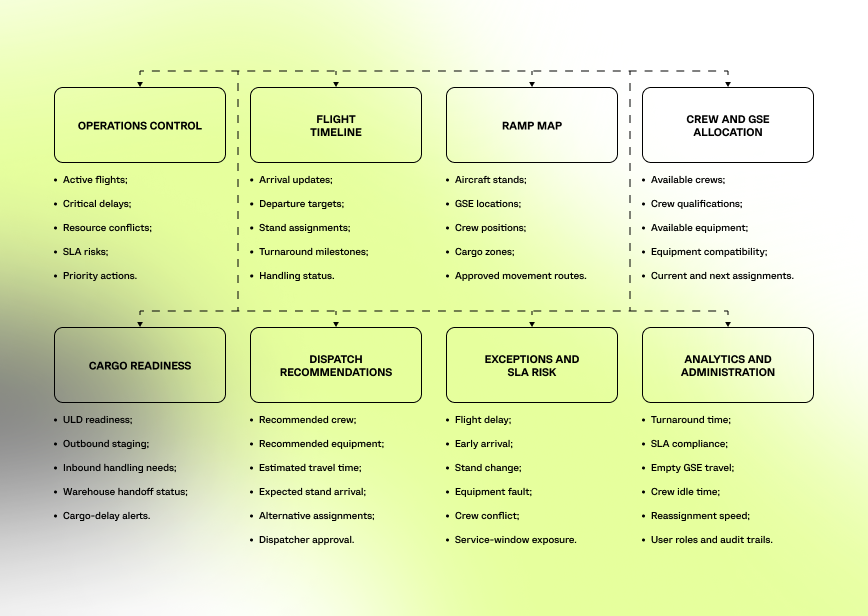
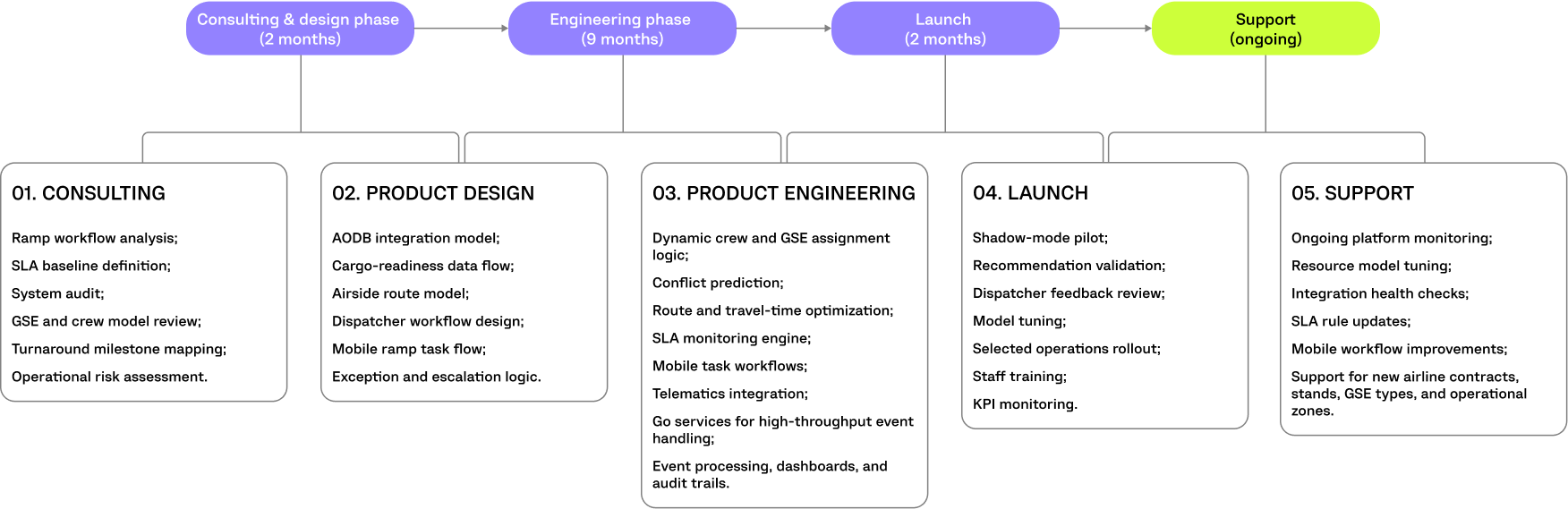
The ramp dispatch optimization layer received live updates from the Airport Operational Database, including arrival changes, departure changes, on-block events, off-block events, aircraft status, and stand assignments. Cargo integrations added Unit Load Device readiness, outbound staging, inbound handling needs, and warehouse-to-ramp handoff status.
The ground support equipment management layer tracked equipment location, availability, maintenance status, current assignments, future commitments, and fuel or battery indicators where fleet data supported those signals. Dispatchers could see which unit was available, compatible, and close enough to reach the stand on time.
RampFlow functioned as airport resource allocation software by scoring crew and equipment assignments against aircraft type, assigned stand, target departure time, handling service-level agreement, cargo volume, required equipment, crew qualifications, task duration, airside travel time, and operational priority. Python-based optimization services predicted conflicts, estimated travel time, and ranked dispatch options as conditions changed.
The system also supported airport AODB integration through APIs and event messaging. When a flight changed, RampFlow recalculated affected assignments and showed dispatchers the conflict, recommended replacement crew or equipment, the current resource location, the estimated travel time, the expected stand arrival, the service-window impact, and alternative options. Dispatchers could approve, modify, or reject recommendations, while RampFlow recorded assignment history, exceptions, overrides, and audit trails.