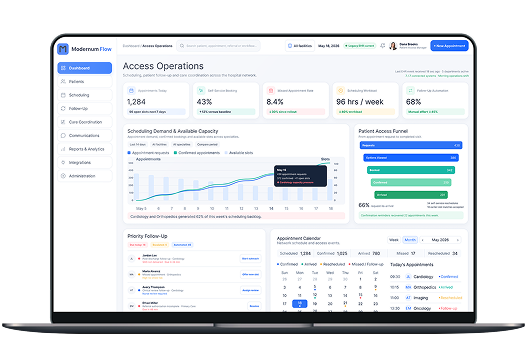
The client operates a multi-specialty U.S. hospital network using a 20+ year-old EHR environment across multiple departments. Scheduling, patient access, follow-up, and care coordination were distributed across the EHR, scheduling tools, call-center workflows, and manual staff processes.
Computools delivered EHR modernization services through Modernum Flow, a modernization and workflow automation layer built on top of the existing EHR. The solution connected patient access, scheduling, outreach, and staff workflows without replacing the underlying clinical system.
The new environment reduced missed appointments by 30%, scheduling workload by 40%, manual patient follow-up effort by 45%, and administrative workflow time by 35%. Feature delivery also accelerated by up to 35%.
The client is a U.S. multi-specialty hospital network operating across several clinical departments. Its legacy EHR remained central to daily care delivery, making full replacement operationally risky.
Over time, surrounding workflows had become increasingly fragmented. Staff moved between scheduling applications, call-center processes, manual follow-up lists, and the core EHR to complete routine patient-access tasks.
The hospital needed hospital workflow management software that could improve staff efficiency without disrupting the clinical workflows already embedded in its legacy environment. It also needed a modern patient engagement platform that could give patients more control over appointment booking, rescheduling, reminders, and communication.
The core EHR had been in place for more than two decades. Replacing it would have introduced significant operational risk, but leaving surrounding workflows unchanged was increasing administrative workload.
The hospital needed healthcare workflow automation to reduce repetitive work while preserving clinical control. The project also required healthcare legacy system modernization that could extend the useful life of the existing EHR without forcing a core-system replacement.
Because scheduling, care coordination, patient communication, and administrative operations spanned multiple departments, the engagement also required experience in hospital management software development.
Computools built Modernum Flow as a modernization layer on top of the existing EHR. The platform connected scheduling, patient access, follow-up, and staff workflows while leaving the underlying clinical logic intact.
Patient scheduling automation synchronized appointment workflows across the existing hospital systems and reduced repetitive scheduling actions for staff. The patient self-scheduling software allowed patients to book or reschedule appointments via web, SMS, and messaging channels without having to rely on the call center for every change.
A care coordination platform continuously evaluated clinical and operational criteria to identify patients who required additional follow-up. Patient follow-up automation then triggered reminders, outreach, and care-team workflows based on those criteria.
The project also used healthcare system integration services to connect the modernization layer with the hospital’s existing scheduling, patient, and EHR data. Healthcare software development supported the broader modernization effort across patient-facing and staff-facing workflows without changing the core EHR.
Modernum Flow reduced administrative effort while preserving the hospital’s existing clinical system:
Patient self-service reduced reliance on call-center scheduling, while automated follow-up removed repetitive outreach tasks from care teams. Web development gave patients a modern interface for booking and rescheduling appointments and provided staff with a cleaner operational workspace layered over the legacy EHR.
Data engineering connected scheduling, patient, and workflow data across hospital systems, giving automated processes and care teams a more consistent operational view.
The project required modernizing a clinical system used across multiple hospital departments without disrupting it.
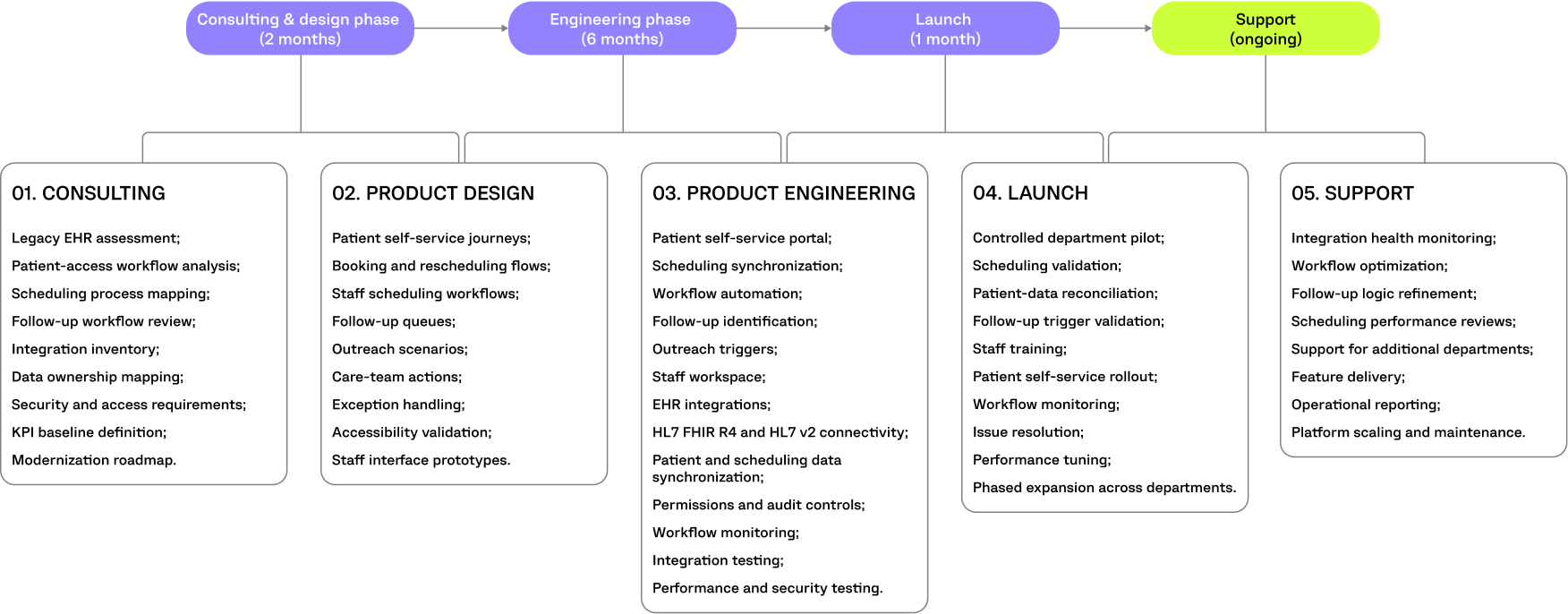
Computools structured delivery around integration with the existing EHR, workflow automation, patient self-service, and gradual replacement of repetitive administrative interactions. The solution preserved the hospital’s core clinical logic while allowing new patient and staff capabilities to be delivered independently from the legacy interface.
Delivery remained tied to measurable outcomes across scheduling workload, missed appointments, follow-up effort, administrative time, and feature-delivery speed.

The design connected patient self-service with hospital staff workflows. Patients could manage appointments more easily, while staff gained faster access to scheduling and follow-up actions.
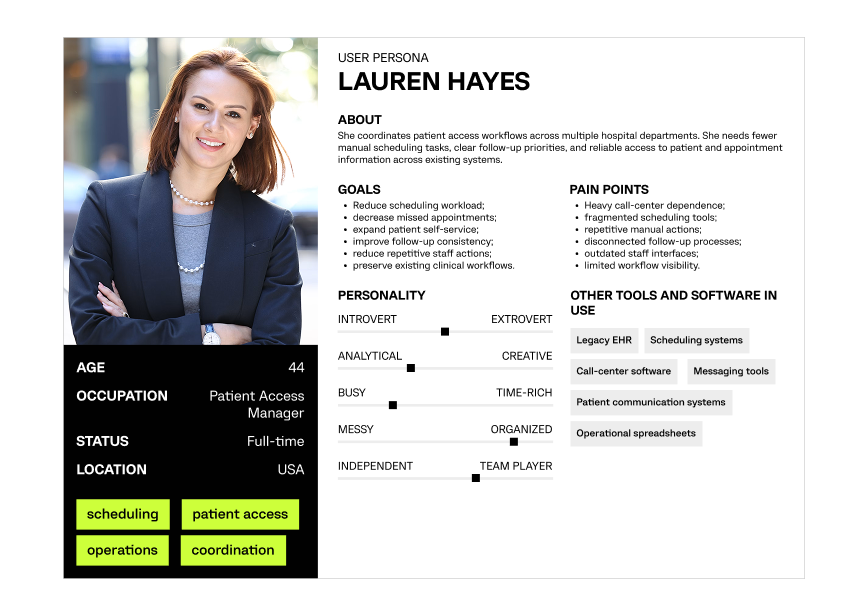
Defining the needs of a patient access manager responsible for scheduling efficiency, staff workload, and consistent patient follow-up.
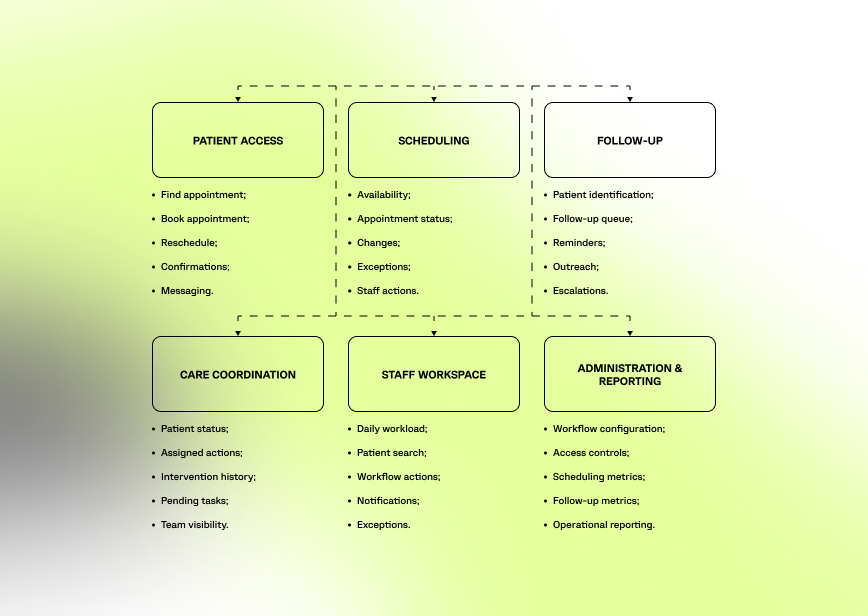
Organizing patient access, scheduling, follow-up, and staff workflows around the existing EHR environment.
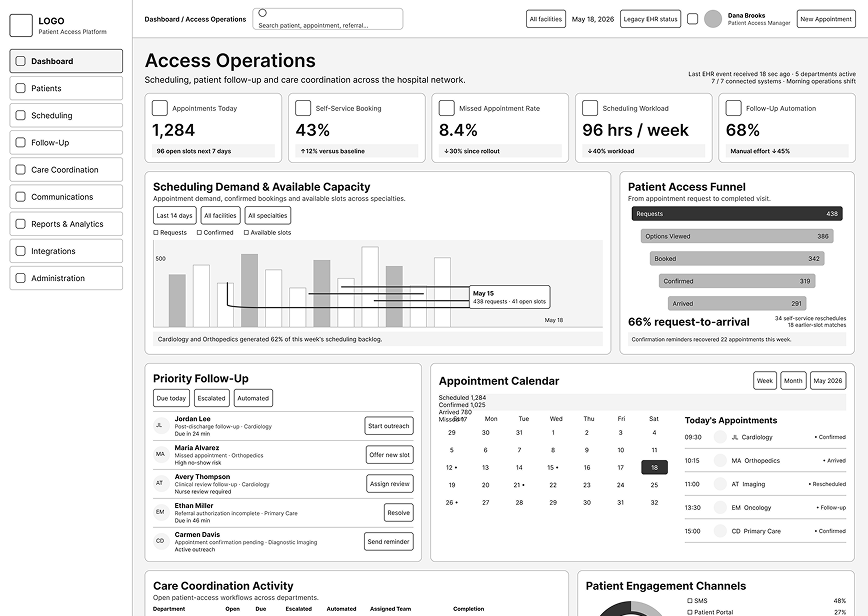
Testing self-booking, rescheduling, follow-up prioritization, outreach, and staff workflow actions before interface development.
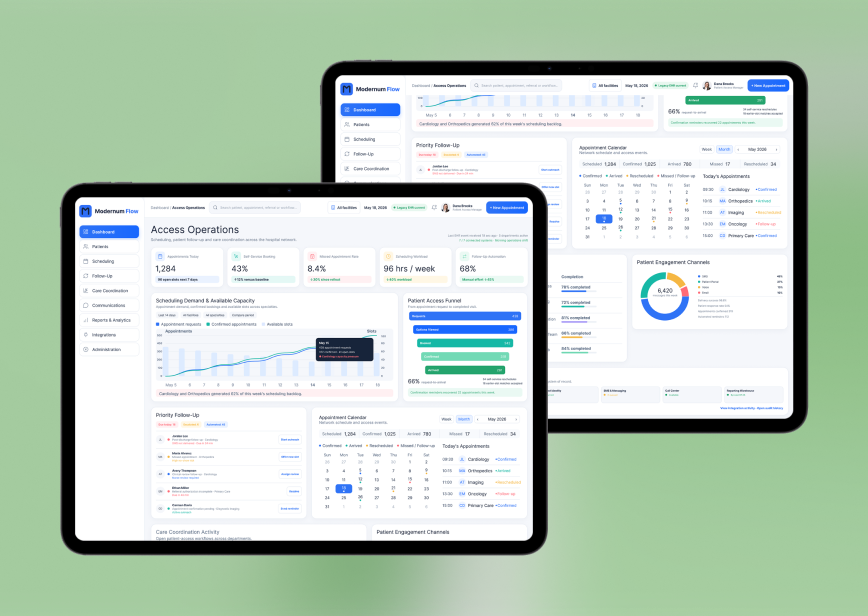
Creating patient and staff interfaces that simplify appointment management and follow-up while keeping the legacy EHR in place.

TypeScript
TypeScript supported shared data contracts across patient scheduling, staff workflows, appointment states, outreach events, and integration services.

React
React powered patient self-service and staff-facing interfaces, including appointment booking, rescheduling, follow-up queues, notifications, and workflow actions.

.NET
.NET handled scheduling logic, workflow orchestration, patient-access services, permissions, and integration with existing hospital systems. HL7 FHIR R4 and HL7 v2 interfaces connected clinical, scheduling, and patient data without replacing the core EHR.

PostgreSQL
PostgreSQL stored workflow states, scheduling references, outreach events, follow-up actions, and operational audit data.

Python and FastAPI
Python and FastAPI supported follow-up prioritization logic and workflow recommendations using predefined clinical and operational criteria.

Azure and Service Bus
Azure hosted the modernization services, while Azure Service Bus supported reliable communication between scheduling, patient, outreach, and EHR-connected workflows.
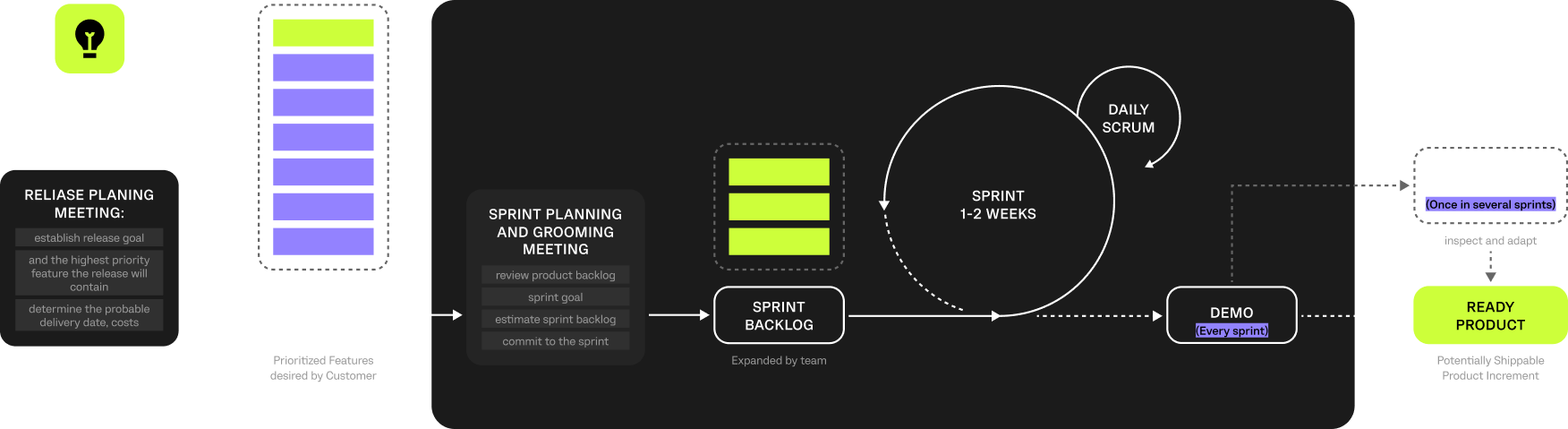
Computools used a Scrum-based delivery model with two-week iterations and regular validation by patient-access, scheduling, care-coordination, and hospital IT teams.
Each sprint connected a technical output to an operational requirement, such as scheduling accuracy, patient data consistency, follow-up triggers, integration reliability, workflow completion time, and staff usability.
High-risk integrations and workflow changes were validated against existing EHR behavior before broader rollout. Patient self-service, automated outreach, and staff workflows were introduced incrementally to limit disruption across active hospital departments.
We knew replacing the EHR wasn’t realistic, but our teams were losing too much time working around it. Patients were still calling for routine scheduling changes, and follow-up depended too much on manual checks. Modernum Flow made those workflows much easier without forcing us to change the clinical system everyone already relies on.




Computools | 341 Raven Cir, Camden Wyoming, Delaware 19934, US