Background
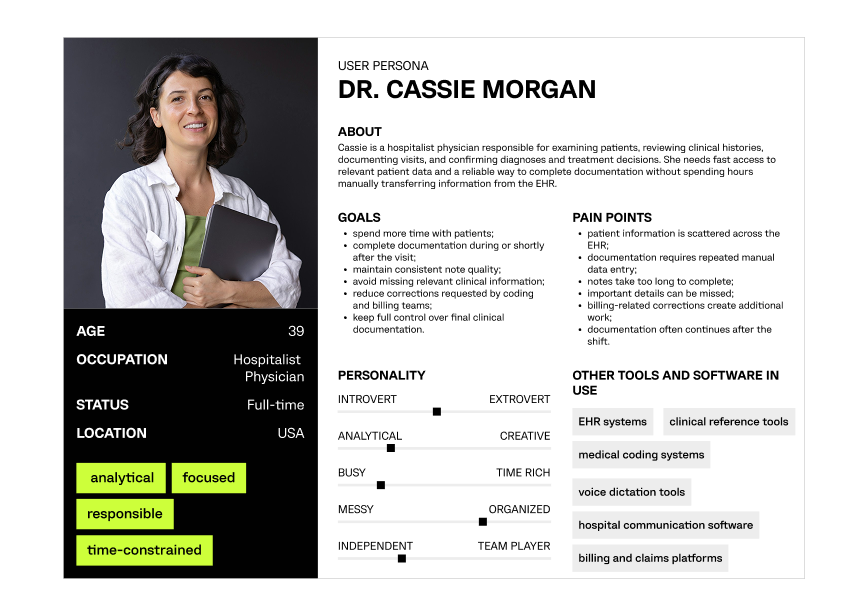
Physicians worked with large volumes of information required for every clinical note. Patient history, diagnoses, medications, previous encounters, test results, and current findings were stored across different parts of the EHR.
Preparing a complete note required clinicians to manually review and transfer this information, extending documentation work beyond the patient encounter and often beyond the scheduled shift.
Approach to solution
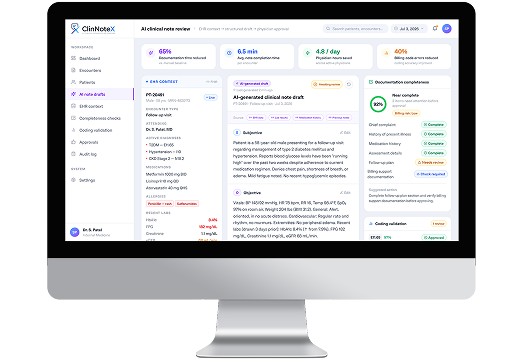
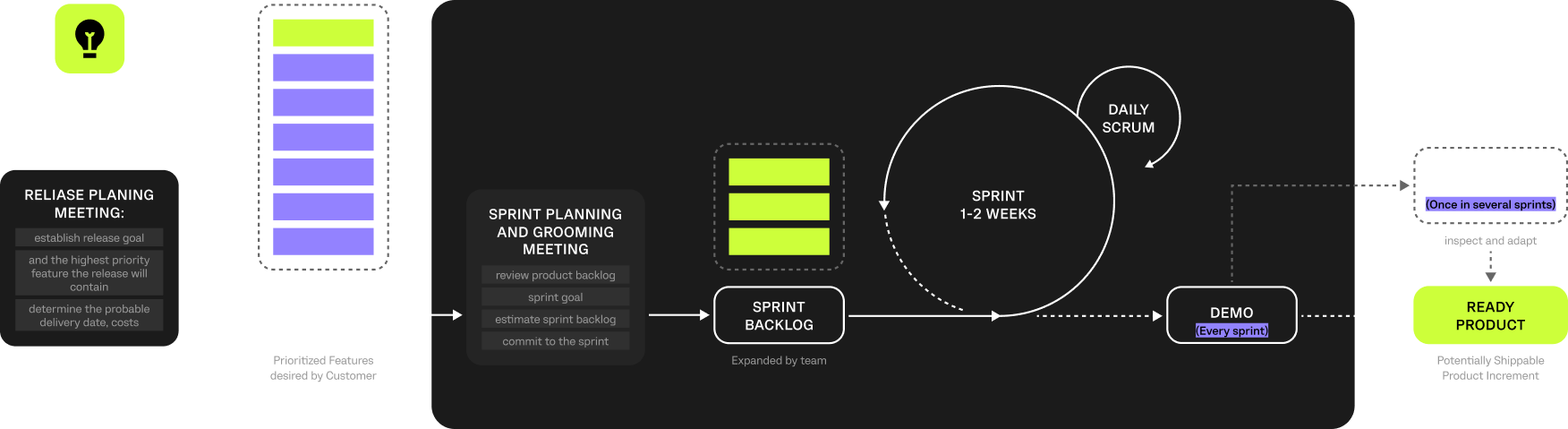
Computools approached the project as a clinical workflow automation initiative to reduce documentation time while preserving physicians’ control over the final record. The work began with mapping how patient data moved through the EHR, how physicians assembled notes, and where missing information or billing inconsistencies created additional review cycles.
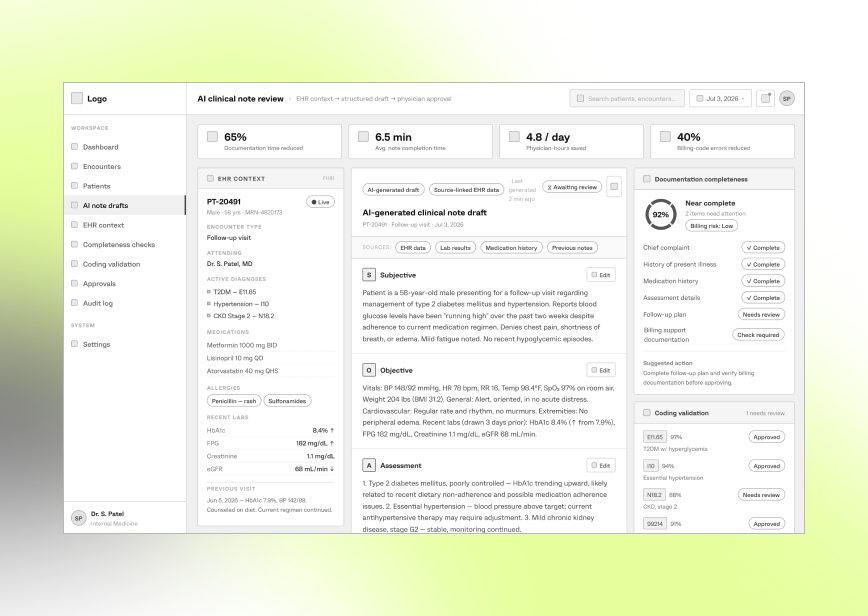
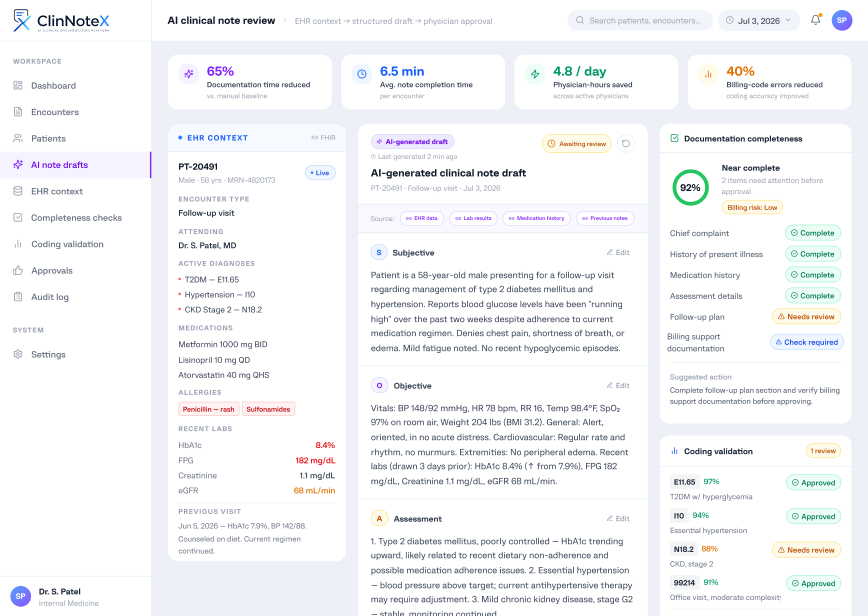
The solution was developed in stages, starting with FHIR and HL7 data integration and patient-context aggregation, followed by LLM-based note generation, RAG-enabled retrieval of medical history and approved templates, and rule-based validation for documentation completeness and billing requirements. Each generated note remained subject to physician review before being returned to the EHR.
Integration Challenges & Approach
The hospital relied on patient data distributed across multiple EHR modules and clinical data feeds with different structures, interfaces, and update cycles. Computools implemented a standards-based integration layer using HL7 FHIR R4 for structured data exchange, and HL7 v2 for legacy data flows.
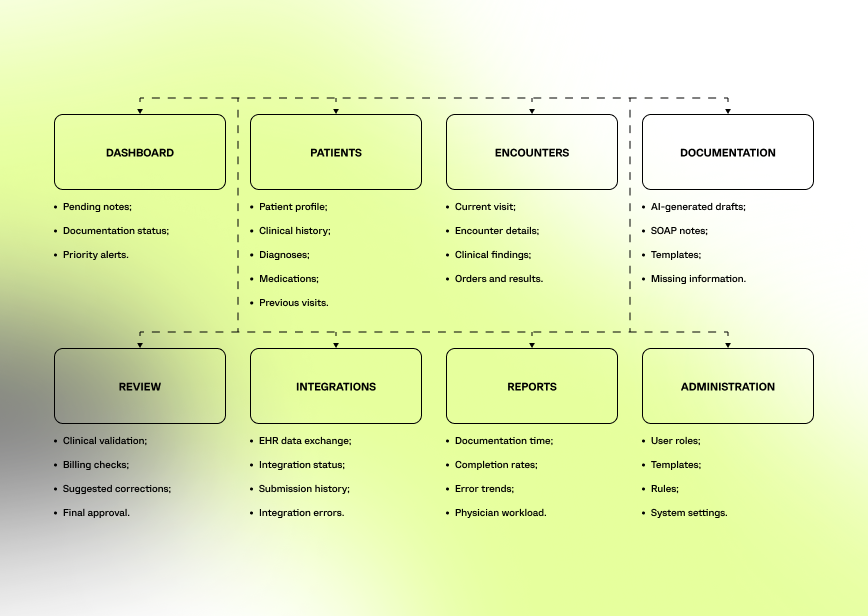
A normalization layer consolidated demographics, encounters, diagnoses, medications, results, and clinical events into a consistent patient context. Bidirectional data exchange then returned approved notes to the EHR without disrupting existing clinical workflows.
Computools role
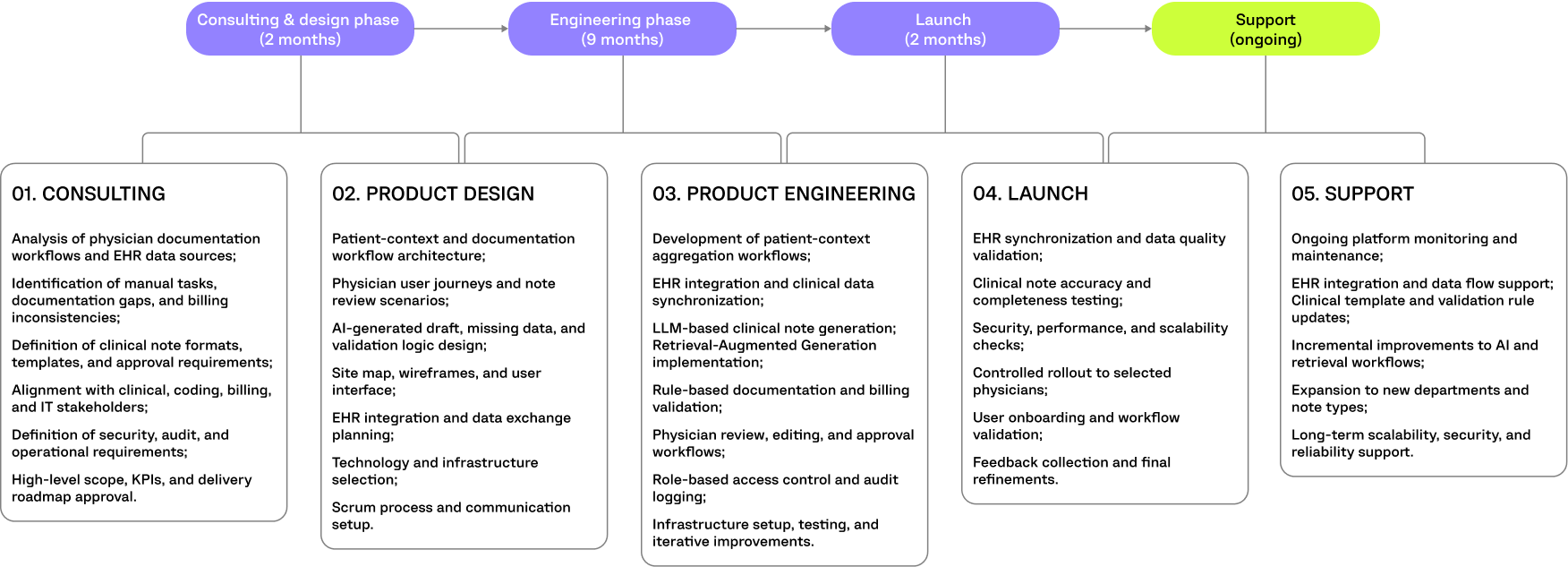
Computools acted as the end-to-end delivery partner, responsible for:
- Analysis of physician documentation workflows;
- Product strategy, UX/UI design, and platform architecture;
- FHIR and HL7 integration with the hospital’s EHR;
- Development of the patient-context aggregation layer;
- LLM-based clinical note generation;
- RAG implementation for medical history and template retrieval;
- Rules engine development for documentation and billing validation;
- Role-based access control, audit logging, testing, and launch.
The team worked closely with clinical, coding, billing, and IT stakeholders to ensure the platform aligned with hospital workflows, documentation standards, and physician review requirements.
Key decisions and outcomes
Key architectural decisions focused on using the complete patient history and approved templates, separating AI-generated content from rule-based validation, and keeping final clinical approval under physician control. Approved notes were returned directly to the EHR to maintain continuity within existing workflows.
As a result, the hospital reduced documentation time by up to 65%, improved note consistency, and decreased billing-code errors by up to 40%.
In a representative workflow, average note completion time fell from 18 to 6.5 minutes, a 64% reduction.
At 25 notes per physician per day, this reduced daily documentation time from 7.5 hours to approximately 2.7 hours, saving about 4.8 physician-hours per day.