



THE AUTHOR:

Global rail freight is rapidly digitizing as logistics companies seek greater visibility into cargo conditions and asset performance. Railway cargo monitoring software is now essential for rail operators and freight owners who require real-time insight into cargo safety, environmental conditions, and operational risks during long-distance transport.
Market trends indicate strong long-term demand for these solutions. The global railway telematics market is expected to reach approximately USD 9.9 billion in 2025 and exceed USD 23.4 billion by 2035, with a projected CAGR of about 9% as operators adopt more sensors, tracking devices, and real-time analytics across freight fleets.
Adoption of connected monitoring devices on freight wagons is accelerating. The global installed base of rail tracking and telematics devices reached approximately 775,000 units in 2024 and is projected to exceed 1.3 million by 2029, highlighting the industry’s move toward real-time visibility and digital freight operations.
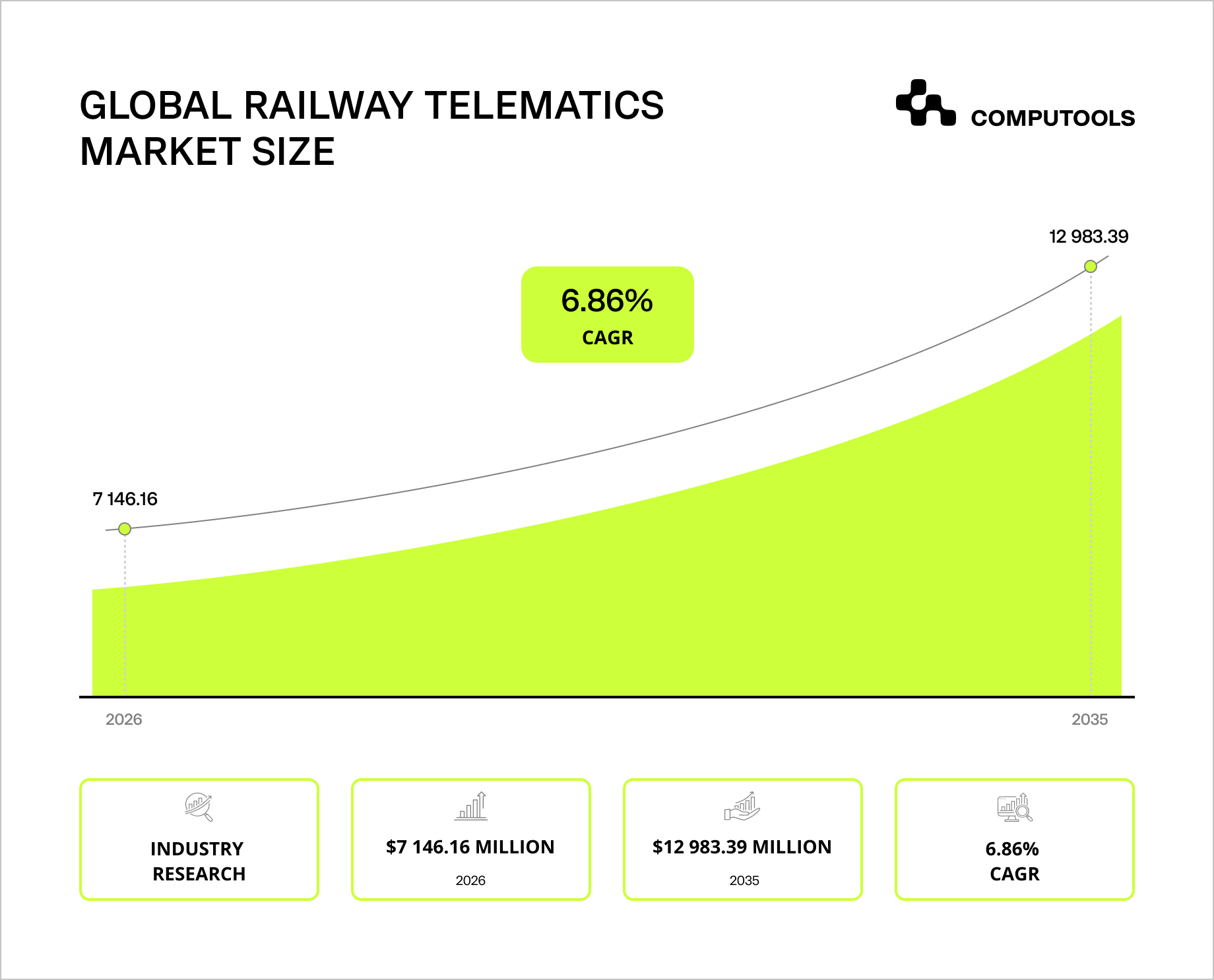
Freight transport continues to drive this growth. Freight applications account for over 80% of railway telematics deployments, as large wagon fleets require continuous monitoring of cargo conditions, location, and operational status across global supply chains.
Global rail freight is rapidly digitizing as logistics companies seek greater visibility into cargo conditions and asset performance. Similar principles of operational visibility and dynamic allocation are explored in our article How to Develop Capacity Sharing Software for Transportation Networks, which discusses building platforms for managing distributed transport resources in real time.
How Computools build railway cargo monitoring software for freight operators
Our approach to railway cargo monitoring software is based on practical experience with large rail logistics systems, where operators manage thousands of freight wagons across complex international networks. Limited cargo visibility, delayed incident detection, and reliance on manual inspections in these settings increase operational risks and inefficiencies.
We applied these principles while working with a Western European rail operator that required a digital platform capable of tracking freight wagons and monitoring cargo safety conditions in real time.
The operator required a scalable system to collect telemetry from wagon sensors, transmit data reliably across rail infrastructure, and alert operators immediately when safety parameters fell outside acceptable ranges. To meet these needs, our team developed a platform that integrates IoT sensors, telematics communication protocols, and centralized analytics.
The system continuously collects operational data from cargo wagons, including temperature, pressure, and volume. Using the MQTT protocol, sensor data is transmitted to a central monitoring environment where it is processed and analysed in real time.
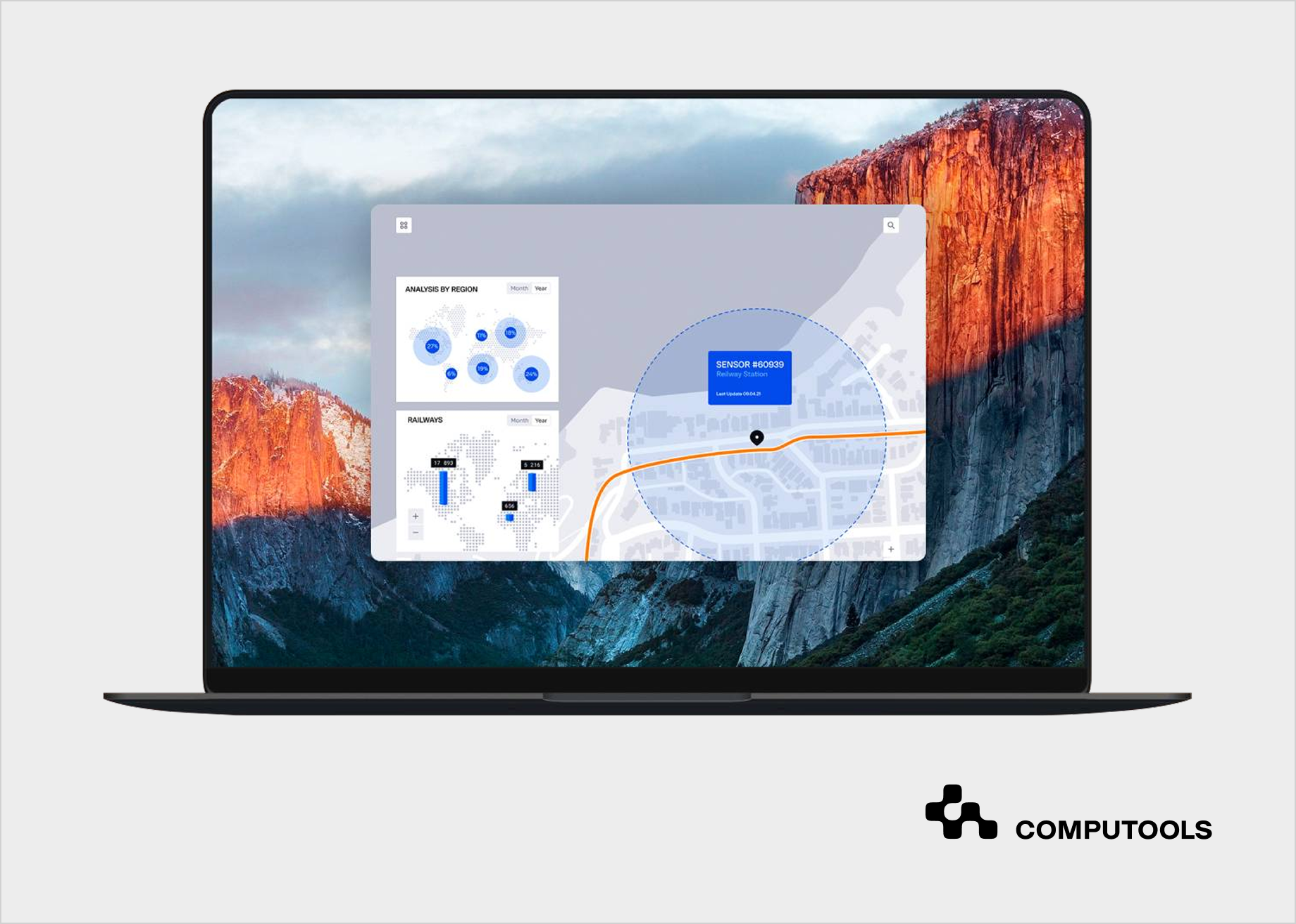
Through advanced IoT development services, we implemented a telemetry infrastructure that enables reliable communication between onboard sensors and the central monitoring platform.
The system aggregates data from multiple wagons and routes it into analytics pipelines supported by scalable data engineering services, allowing operators to detect anomalies, monitor cargo conditions, and respond quickly to potential safety risks.
The platform offers logistics teams a unified interface to track wagon positions, review cargo condition data, and receive automated alerts when operational thresholds are exceeded.
As a result, the rail operator now has continuous visibility into cargo operations and has greatly reduced manual wagon inspections. The system provides round-the-clock monitoring of freight safety and enables faster responses to operational issues across the network.
This project demonstrates our current approach to ground transportation software development. For rail freight operators, scalable telemetry, real-time cargo monitoring, and automated anomaly detection should be integrated into the platform architecture from the outset to enable safer, more efficient fleet management.
Our approach combines IoT-enabled monitoring, real-time analytics, and fleet management dashboards. A similar methodology is applied in complex port environments, as detailed in Top 15 Port & Terminal Management Software Development Companies, highlighting scalable integration with operational workflows and multi-role dashboards.
How to develop railway cargo condition monitoring software for freight safety
Developing a railway cargo condition monitoring platform requires a robust architecture that integrates telemetry, real-time analytics, alerting logic, and scalable infrastructure. The following step-by-step guide outlines this process, drawing on Computools’ experience with a Western European rail operator.
1. Define operational risks, cargo parameters, and monitoring objectives
Begin by identifying what the platform needs to monitor and the reasons for monitoring. In rail freight, system architecture varies based on cargo type, transportation risks, and the operator’s response model. Temperature-sensitive cargo, hazardous materials, bulk liquids, and high-value goods each require specific monitoring approaches.
At this stage, teams usually define:
• what cargo conditions must be tracked
• which thresholds are considered critical
• what events require alerts
• how quickly operators must respond
• which roles need access to the data
This phase also involves identifying operational challenges, including manual inspections, limited visibility between terminals, fragmented fleet data, and delayed incident detection. Without this foundation, the software may function only as a basic tracking tool rather than a comprehensive safety platform.
For a Western European rail operator, we first identified the client’s main challenge: the absence of a centralized system for real-time monitoring of freight wagon locations and safety-related cargo conditions. As a result, we designed the platform to provide visibility and support a broader smart railway freight management strategy. This approach aimed to reduce manual checks, accelerate decision-making, and enable early warnings for deviations in wagon parameters.
2. Select the right sensors, edge devices, and telemetry logic
After defining the operational objectives, the next step is to design the physical data-collection layer for the monitoring platform. In railway freight, this involves selecting appropriate sensors, edge devices, telemetry intervals, and signal validation logic to ensure the platform generates reliable operational data.
At this stage, engineering teams must determine which physical parameters impact cargo safety, wagon condition, and compliance. These parameters vary by freight type. For temperature-sensitive goods, the monitoring model should frequently capture thermal fluctuations to detect deviations before spoilage.
For hazardous or liquid cargo, monitoring pressure stability, seal integrity, and changes in fill level is essential. For sensitive industrial goods, vibration, shock, tilt, and unauthorized door opening may be more significant risk indicators than environmental factors alone.
A production-grade platform typically integrates several telemetry inputs, such as:
• temperature
• humidity
• pressure
• vibration and shock events
• tilt and position changes
• door opening status
• fill level or cargo volume
• GPS or GNSS location data
• wagon identification and route metadata
However, sensor selection is only one aspect of the architecture. The system must also specify measurement intervals, data buffering during connectivity issues, edge device validation or preprocessing, and criteria for immediate data transmission.
This is especially important in rail environments, where wagons travel long distances, cross zones with inconsistent connectivity, and may be outside operator control for extended periods. Without a clear telemetry strategy, deploying sensors alone often leads to incomplete, delayed, or unreliable data, reducing the platform’s overall value.
That is why professional system design at this stage usually covers several additional questions:
• which parameters require continuous measurement and which can be sampled periodically
• what deviation range should be considered normal for a specific cargo type
• which events must trigger immediate alerts
• how sensor calibration will be managed across the wagon fleet
• what edge logic is needed to reduce false positives
• how telemetry devices will behave during power interruptions or signal loss
In railway cargo temperature monitoring, recording occasional temperature values is insufficient. The platform must detect trend-based deviations, prolonged exposure outside safe ranges, and abnormal temperature gradients that could signal insulation failure, ventilation problems, or equipment malfunctions. Achieving this requires accurate sensors and a well-designed telemetry model.
For a Western European rail operator, the client required real-time visibility into cargo safety indicators across a large freight network. Computools developed a monitoring layer focused on the most critical parameters: temperature, pressure, and volume.
We structured the telemetry flow to ensure reliable transmission of wagon-level data to the central platform for immediate operational analysis, not just passive recordkeeping. This step was essential, as the system’s value depended on data quality.
By establishing the correct telemetry architecture early, we enabled the platform to support threshold-based alerts, continuous monitoring, and operator response workflows in later development stages.
3. Design a secure and resilient data transmission architecture
After deploying telemetry devices on freight wagons, the next step is to design a communication architecture that reliably transmits sensor data across distributed rail networks. Unlike urban IoT environments, railway infrastructure includes rural corridors, tunnels, cross-border routes, and areas with inconsistent cellular coverage. The monitoring platform must therefore tolerate intermittent connectivity and maintain data integrity.
A reliable telemetry architecture uses lightweight communication protocols, edge buffering, and secure authentication to protect data flow between sensors, gateways, and backend systems. When connectivity is lost, edge devices should store telemetry locally and transmit it once the signal is restored. This approach prevents data gaps and ensures continuous cargo monitoring, even in challenging network conditions.
Modern rail transport safety technology increasingly uses publish-subscribe communication models, such as MQTT, which minimize bandwidth and enable efficient message delivery across large fleets of devices. Encryption and authentication are essential, as railway monitoring platforms often operate in safety-sensitive logistics environments.
For a Western European rail operator, Computools implemented MQTT as the core protocol connecting wagon sensors to the central monitoring platform. This approach enabled reliable telemetry and secure data exchange across the rail network. Lightweight messaging and buffered transmission ensured operational data remained consistent, even when connectivity varied along the route.
4. Build a scalable data ingestion and analytics infrastructure
Once the telemetry pipeline is in place, the next step is to build backend infrastructure that can ingest, process, and analyze continuous sensor data. Railway cargo monitoring systems must handle high volumes of telemetry from multiple wagons, routes, and operational events. Without scalable ingestion and analytics, the platform cannot deliver real-time operational insights.
At this stage, engineering teams design a streaming data architecture to convert raw telemetry into structured operational information. The platform must support real-time ingestion, distributed processing, and flexible storage to manage growing datasets.
The IT infrastructure must also support historical data analysis. Historical telemetry enables operators to identify patterns in cargo damage, infrastructure stress, or equipment degradation. These insights are essential for improving safety and optimizing freight operations.
Computools developed a centralized processing environment to aggregate and analyze freight wagon telemetry data in near real time. Apache Spark efficiently processed high-volume telemetry streams, and MongoDB provided flexible storage for dynamic sensor data. This architecture allowed rapid detection of abnormal cargo conditions and maintained historical records for operational analysis.
As a result, the platform became a set of robust cargo integrity monitoring systems that deliver real-time alerts and support advanced analytics across the operator’s freight network.
5. Create alerting logic, anomaly detection, and operator workflows
Monitoring data becomes operationally valuable only when the platform can interpret it and translate it into timely actions. That is why alerting and anomaly detection are central components of effective railway telematics software solutions. The goal at this stage is to convert telemetry streams into a structured event management model. This approach helps operators detect risks, prioritize interventions, and respond before cargo damage or safety incidents occur.
This layer typically includes:
• threshold-based alerts
• anomaly detection rules
• severity prioritization
• escalation workflows
• user-specific notification logic
• alert acknowledgment and resolution tracking
• full event history for audits and investigations.
Effective implementations go beyond generating alerts by specifying recipients, required response times, relevant data for operators, and recommended actions based on the type of deviation.
In our Western European rail project, Computools developed custom analytics that enabled the platform to automatically detect abnormal temperature, pressure, and volume readings and notify operators in real time. This allowed for faster responses to potential cargo risks and reduced reliance on delayed manual checks.
As projects progress, they often require expanded logistics software development services to support operational workflows, role-based dashboards, alert routing, reporting, and integration with existing freight management processes. At this stage, a railway monitoring platform evolves into a comprehensive operational system.

Evaluate how sensor data, edge processing, and predictive analytics can improve freight safety—and engage our experts to scope and estimate your monitoring platform
6. Design operational dashboards and monitoring interfaces
After establishing the data infrastructure and alerting logic, the platform should provide operators with a clear, actionable interface for monitoring cargo conditions and responding to incidents. In railway freight, operational roles engage with monitoring systems differently: dispatchers track wagon movement and cargo status, safety managers monitor anomaly alerts, and maintenance teams analyze trends indicating equipment degradation.
Therefore, monitoring interfaces should be designed around operational workflows instead of raw telemetry. A well-structured dashboard enables operators to view wagon locations, cargo condition parameters, and alerts in a single environment, enabling faster decision-making when abnormal readings occur.
Modern platforms also integrate historical analytics into monitoring dashboards. By analyzing historical sensor data, operators can detect patterns associated with recurring failures or infrastructure-related stress on wagons. This is where monitoring platforms begin supporting predictive maintenance for rail freight, helping operators identify early signs of equipment issues before they lead to cargo damage or operational disruption.
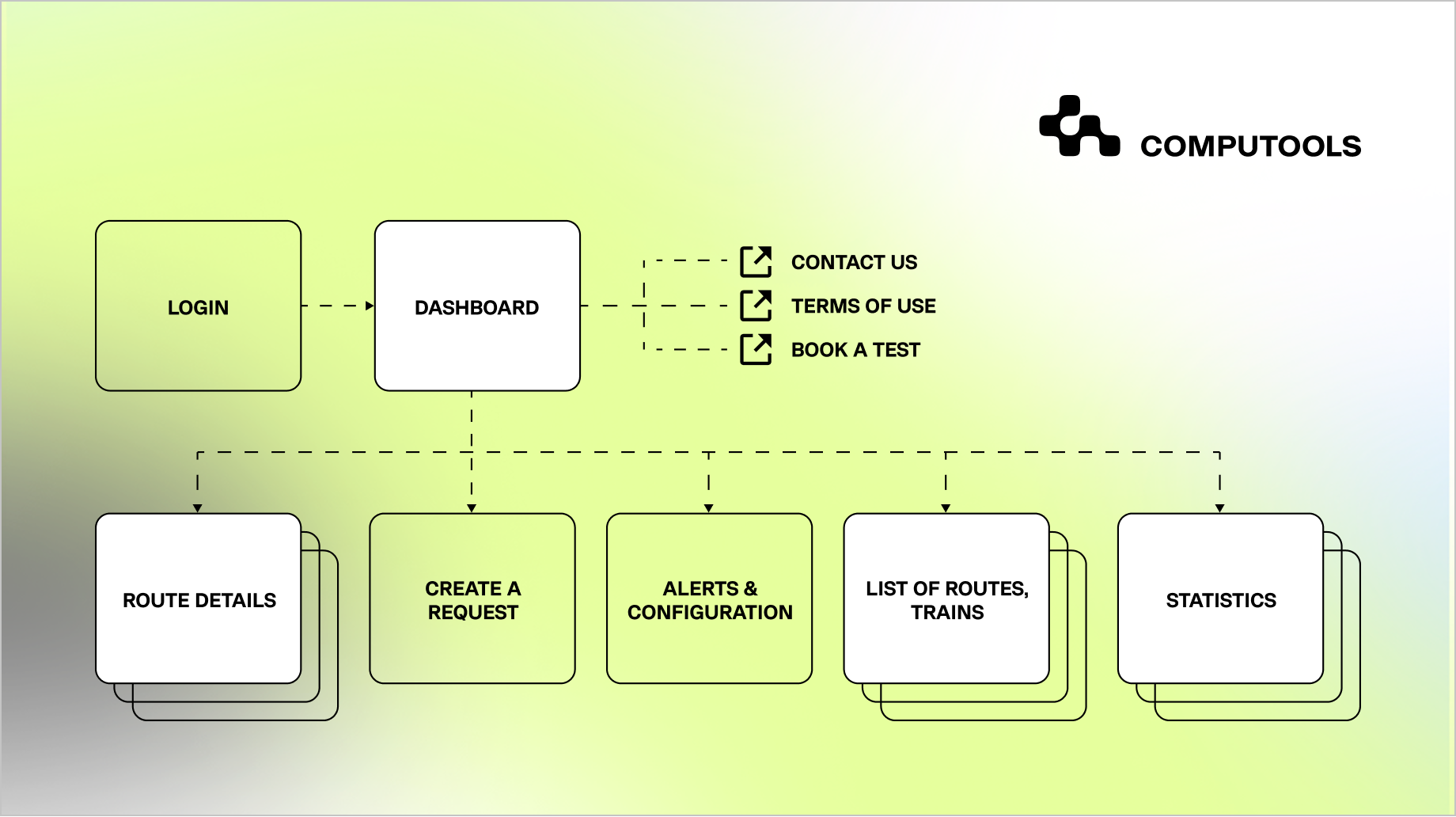
For a Western European rail operator, Computools developed a unified monitoring interface enabling operators to track wagon locations, view cargo condition data, and receive real-time alerts.
The design process included user persona modeling, platform structure design, wireframing, and user interface development to ensure ease of use for logistics teams across the client’s rail network.
7. Implement fleet-level visibility and network monitoring
Cargo condition monitoring often begins at the wagon level, but large rail operators require visibility across the entire fleet. A robust platform should aggregate telemetry from hundreds or thousands of wagons and transform this data into actionable insights for logistics teams to manage the network efficiently.
Fleet-level monitoring enables operators to view multiple wagons at once, track cargo conditions along specific routes, and detect operational anomalies that may be missed when reviewing wagons individually. This comprehensive view is essential in rail logistics, where cargo safety depends on infrastructure quality, route conditions, and operational delays throughout the network.
A mature railway fleet monitoring software platform typically combines real-time dashboards with analytics, enabling operators to assess long-term trends in cargo conditions and wagon performance. For instance, repeated temperature deviations in certain corridors may indicate infrastructure issues, while recurring vibration spikes can reveal track wear or equipment instability affecting several wagons.
Fleet-level visibility enhances asset utilization and operational planning. With access to wagon availability, cargo conditions, and route performance in one system, logistics teams can quickly make decisions on dispatching, rerouting, and maintenance. This reduces idle rolling stock and increases freight network efficiency.
For a Western European rail operator, Computools implemented a centralized monitoring platform that aggregated telemetry data from multiple freight wagons into a single operational environment. Operators could track wagon locations, monitor cargo parameters, and analyze fleet performance through one interface.
By integrating real-time monitoring with historical analytics, the client gained a comprehensive view of freight operations and improved their response to potential cargo risks.
8. Validate the platform through real-world testing and staged deployment
Even the most carefully designed monitoring platform requires validation in real railway operating conditions before large-scale deployment. Rail environments present distinct challenges, including variable connectivity, long transport distances, environmental stress on sensors, and complex operations with multiple logistics partners.
As a result, railway monitoring systems are usually deployed in stages. The process starts with pilot installations on selected wagons or routes, allowing engineering teams to assess the performance of telemetry devices in real-world conditions. This phase enables evaluation of sensor reliability, communication protocol stability, and analytics infrastructure responsiveness.
Testing focuses on data consistency and system resilience. Engineers ensure telemetry messages are transmitted correctly during connectivity interruptions, alert logic responds to abnormal readings, and the platform scales to support growing sensor data as more wagons are connected. Security testing is also critical for protecting sensitive operational data and maintaining continuous communication between devices and backend systems.
Computools used an iterative Agile development process, enabling the monitoring platform to evolve through several implementation phases. Each phase involved developing, testing, and validating specific system components before expanding deployment to more wagons. This method reduced operational risks and ensured reliable scalability as the client integrated the platform into their freight operations.
This staged rollout enabled the monitoring system to mature into a stable environment that supports large-scale telemetry ingestion, real-time alerts, and continuous cargo condition monitoring. Validation processes like these are essential in rail cargo IoT software development, where reliable operation is critical and data loss or monitoring gaps are unacceptable.
9. Integrate the monitoring platform with logistics and railway management systems
A cargo monitoring platform provides the most value when integrated with the broader digital ecosystem used by railway operators. Freight operations rely on several enterprise platforms, such as transport management systems (TMS), dispatching tools, asset management software, and infrastructure monitoring solutions. Without integration, telemetry data remains isolated and cannot fully support operational decisions.
Integrating the monitoring platform with existing operational systems allows cargo condition data to directly enhance logistics workflows. For example, temperature alerts can trigger responses in dispatch systems, cargo integrity warnings can initiate safety protocols, and wagon telemetry can be linked to shipment documentation in freight management platforms.
This integration layer is essential in modern rail freight monitoring systems, enabling telemetry data to be actively used to optimize logistics operations. When cargo monitoring information flows directly into dispatching, planning, and maintenance systems, operators can respond more quickly to risks, adjust routes as cargo conditions change, and maintain greater transparency across the supply chain.
In our project, Computools designed the monitoring platform to integrate telemetry data with the client’s existing operational environment. This enabled wagon telemetry and cargo condition data to support broader logistics workflows, improving coordination among monitoring teams, dispatchers, and safety managers, and enhancing overall freight network visibility.
10. Ensure long-term scalability, security, and system evolution
Railway monitoring platforms are long-term infrastructure systems that must adapt as the freight network grows. As operators add wagons, sensors, and monitoring capabilities, the software architecture must scale without sacrificing performance or reliability.
For this reason, modern monitoring platforms use modular architectures and cloud-ready infrastructure. Scalable processing pipelines, distributed data storage, and flexible microservice-based design enable the platform to manage higher telemetry volumes as more assets are connected.
Freight monitoring systems process operational data that may be sensitive from a commercial and IT infrastructure perspective. Strong authentication, encrypted communication, and role-based access control are essential to protect data while ensuring authorized teams have the access they need.
In our project, Computools developed a monitoring platform with scalable data processing and a flexible backend, enabling the system to expand as the client adds sensors to more freight wagons. This approach ensures the platform can accommodate future monitoring needs and operational changes.
By following best practices for building railway cargo condition monitoring systems, operators can develop platforms that remain reliable, secure, and adaptable as freight operations become more data-driven.
What are the core capabilities of railway cargo monitoring platforms
Modern cargo monitoring platforms use IoT sensors, telematics, and analytics to give rail operators continuous visibility into freight operations. These systems enable logistics teams to monitor cargo conditions, track wagon movements, and identify safety risks before they cause disruptions.
1. Real-time cargo condition monitoring. Continuous telemetry collection is the foundation of modern cargo condition monitoring for railways. Sensors installed on freight wagons measure parameters such as temperature, pressure, and vibration and transmit this data to centralized monitoring systems.
Real-time monitoring allows operators to detect abnormal cargo conditions during transport instead of discovering problems only after the shipment reaches its destination.
2. GPS wagon tracking. Accurate location tracking is another essential capability of modern freight monitoring platforms. Real-time rail cargo tracking systems use GPS or GNSS modules installed on wagons to continuously monitor their position along the rail network.
This allows logistics teams to monitor route progress, identify delays, and coordinate more effectively between terminals, dispatch teams, and freight operators.
3. Environmental monitoring for sensitive cargo is essential for freight such as food products, pharmaceuticals, and chemicals, which require strict environmental control during transport. Monitoring software uses sensors to continuously measure temperature and humidity inside wagons or containers. If conditions exceed set thresholds, the system generates alerts to help prevent cargo damage and ensure regulatory compliance.
4. Shock and vibration detection. Railway transport exposes cargo to mechanical stress during loading, shunting, and movement across the rail infrastructure. Modern IoT solutions for railway cargo integrate motion sensors and accelerometers that detect abnormal vibration patterns or impact events.
These sensors help identify rough handling, infrastructure issues, or excessive mechanical stress that could damage sensitive cargo.
5. Route analytics and operational insights. In addition to real-time monitoring, cargo tracking platforms generate valuable operational data that can be analyzed over time.
Within modern railway logistics software development, telemetry analytics helps operators evaluate route performance, identify recurring operational risks, and optimize freight planning. These insights help companies strengthen cargo safety procedures and improve efficiency across rail freight operations.
By analyzing historical and real-time telemetry, operators can optimize wagon routing and predict potential cargo risks. These principles are similar to the strategies discussed in Route Optimization Software: A Must-Have Tool for Modern Logistics Businesses, which covers algorithms for dynamic route planning and operational efficiency in logistics networks.
7 reasons companies select Computools for railway cargo monitoring
Choosing a technology partner for railway cargo monitoring requires scale, compliance maturity, and engineering expertise. Computools delivers these strengths, providing secure, reliable, and effective solutions for freight operators.
1. Enterprise delivery capacity – Computools employs over 250 in-house engineers and has completed more than 400 projects in regulated industries, demonstrating the ability to deliver complex monitoring platforms at scale.
2. Freight safety monitoring software expertise – We design solutions that integrate IoT sensors, telemetry, and analytics to monitor cargo integrity, environmental conditions, and operational parameters in real time. This reduces risks and ensures the safe transport of sensitive freight.
3. Advanced AI capabilities – Our AI development services provide predictive analytics for cargo trends, early anomaly detection, and intelligent rail fleet optimization. These features help operators prevent damage and improve efficiency.
4. Reputation and enterprise validation – Computools is trusted by global brands in logistics, manufacturing, and transport, supported by long-term partnerships and a 4.9 rating on Clutch.
5. Certified quality and security – ISO 9001 and ISO 27001 certifications, as well as GDPR and HIPAA compliance, ensure enterprise-grade security and audit-ready solutions for critical freight operations.
6. Seamless integration – Our platforms connect with ERP, TMS, and legacy telematics systems without disrupting operations. Users benefit from unified dashboards, automated alerts, and real-time visibility.
7. Measurable impact – Computools solutions increase operational efficiency, reduce manual workload, optimize fleet use, and provide scalable, resilient architectures for long-term growth.
This combination of technical expertise, compliance, and proven delivery makes Computools the preferred partner for rail operators seeking advanced cargo monitoring and freight safety solutions. To discuss your railway cargo monitoring needs or request a demo, contact Computools at info@computools.com.
Conclusion
A reliable railway cargo monitoring system is vital for modern freight operators. Integrating IoT sensors, real-time analytics, and AI-driven insights helps ensure cargo safety, optimize fleet operations, and reduce risks.
A platform with robust telemetry, automated alerts, and predictive maintenance enables data-driven, proactive logistics management, improving efficiency and safeguarding high-value freight.
Computools
Software Solutions
Computools is an IT consulting and software development company that delivers innovative solutions to help businesses unlock tomorrow.










“Computools was selected through an RFP process. They were shortlisted and selected from between 5 other suppliers. Computools has worked thoroughly and timely to solve all security issues and launch as agreed. Their expertise is impressive.”