
THE AUTHOR:

In today’s multi-vendor retail environment, every second is a new data point. Orders, inventory, shipments, returns, promotions, customer behavior – all form a continuous flow of information that drives business performance.
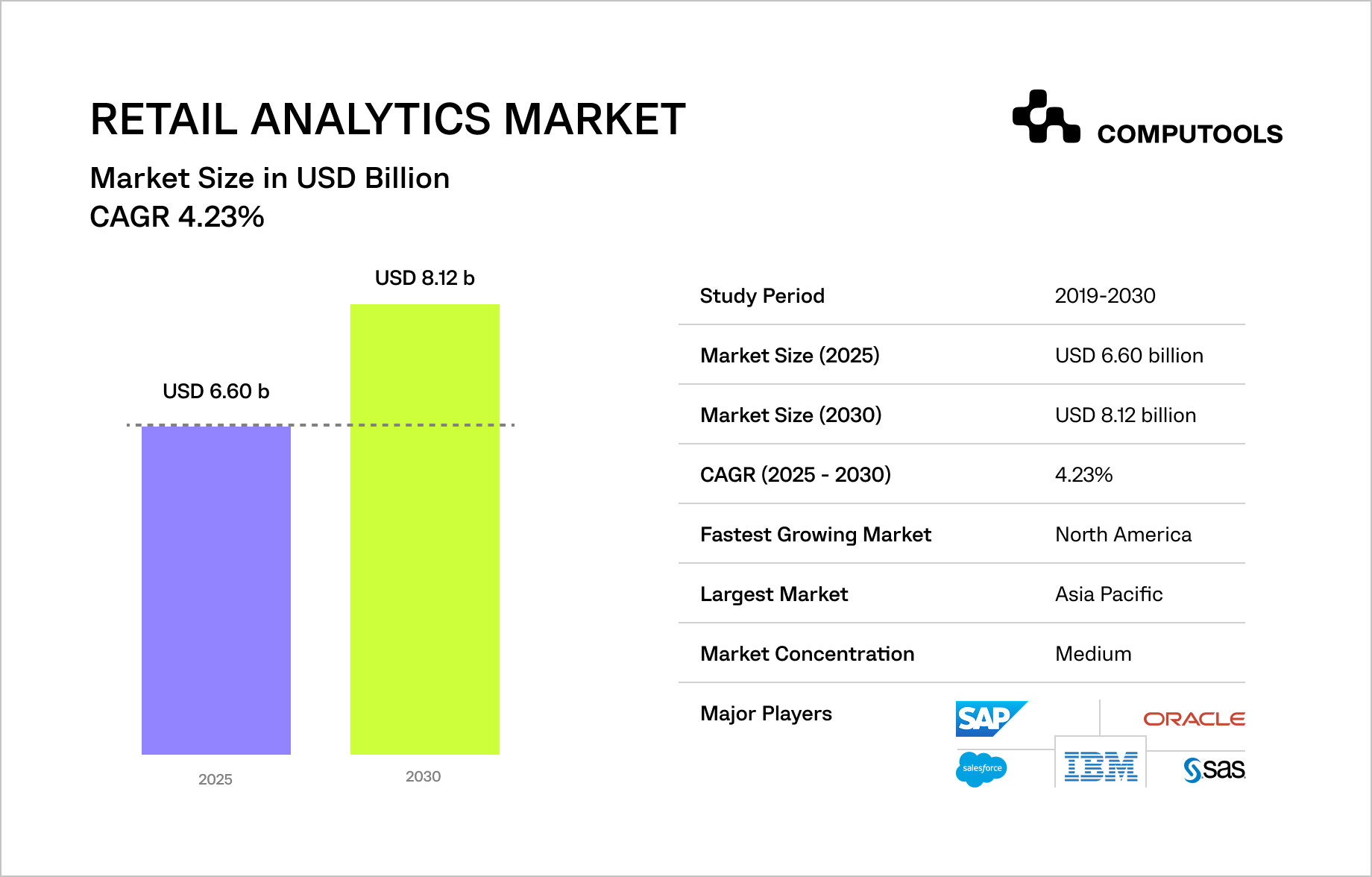
However, most companies still operate in a fragmented environment where data is scattered across CRM, ERP, marketplaces, and eCommerce platforms. According to Mordor Intelligence, the global retail analytics market reached $6.6 billion in 2025 and is projected to grow to $8.1 billion by 2030.
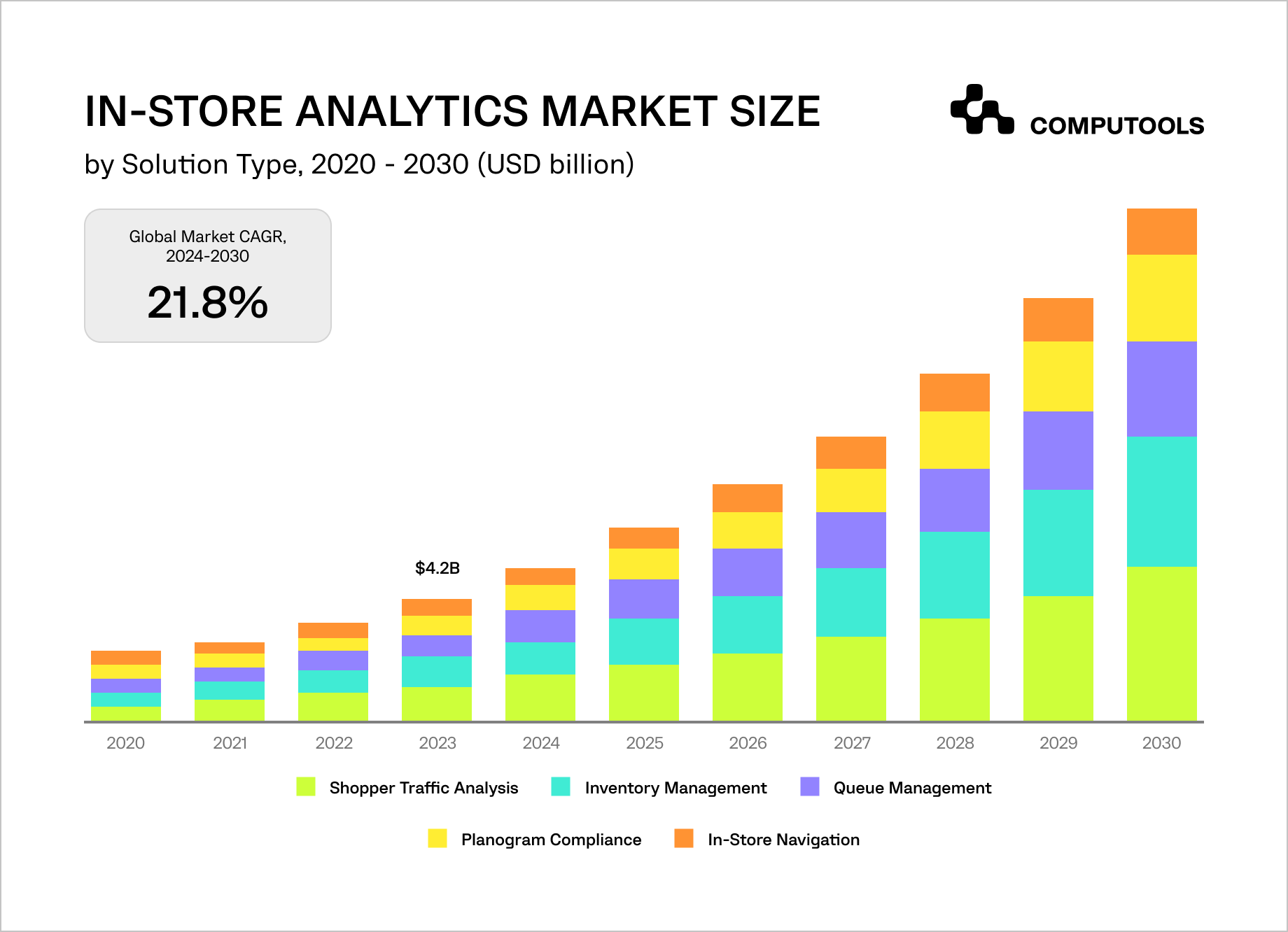
Another report by Grand View Research shows that the in-store analytics segment alone is valued at $4.17 billion in 2023 and could exceed $16.5 billion by 2030, demonstrating the explosive growth in demand for centralized data processing.
These trends confirm: modern retail is moving from disparate systems to integrated management platforms, where the retail data warehouse plays a key role.
Computools has proven expertise in creating such systems. In the Reenox case, we developed a real-time data warehouse for retail, which combined data from dozens of channels, including suppliers, marketplaces, warehouses and CRM systems, into a single management platform. The solution helped the client reduce the time for generating reports, increase the accuracy of demand forecasts by 35% and reduce the cost of manual analytics by half.
It is on the basis of this experience that we have prepared a guide – how to build an effective retail data warehouse architecture using Kafka and BigQuery data pipeline, modern ETL/ELT processes for retail data and cloud technologies for scaling and deep analytics of a multi-vendor business.
How Computools worked on a retail data warehouse for a client
When a global retailer with a network of marketplaces in several countries approached Computools, its main challenge was typical for large chains: heterogeneous data sources, disparate reports and a complete lack of a single information space. The company had hundreds of suppliers, thousands of product lines and dozens of systems, but did not have a holistic view of the business in real time.
To overcome this barrier, we created the Reenox platform, which is a solution based on modern retail data warehouse architecture, which combines flexibility, scalability and speed of analytics. The system was designed around data integration with Kafka and BigQuery, which provides streaming data, its automatic cleaning and processing in a cloud environment.
At the basic level, Reenox combines the capabilities of a cloud data warehouse for retailers with powerful business analytics, allowing you to track sales, inventory, delivery and user behavior in real time. Thanks to customer behavior analytics in retail, managers were able to understand which products are in the greatest demand, optimize purchases and reduce losses from excess inventory.
The solution became part of Computools’ comprehensive approach to retail software development services and eCommerce software development: it helped the client create a stable analytical infrastructure that supports further business scaling.
Results:
- Increase in overall business productivity by 20%;
- Reduction of manual operations and increase in forecast accuracy;
- Instant access to indicators from any region or marketplace.
The Reenox case proved: modern data warehouse solutions for the retail industry transform complex processes into a transparent, managed ecosystem, where every decision is based on data, not intuition.
How to build a retail data warehouse architecture with Kafka and BigQuery
Building a modern data warehouse solution for the retail industry requires a precise balance between technological scalability, data processing speed, and analytics flexibility. In retail, solutions must operate in an environment where dozens of sources operate simultaneously, from warehouses and suppliers to eCommerce platforms and financial software systems. Any delay or inaccuracy in data directly affects profit.
The following is a step-by-step architecture for building a system that Computools tested in practice when creating the Reenox platform.
1. Defining business goals and data maps
The first and most important stage is understanding what data creates value for the business. These are not only sales volumes, but also inventory indicators, pricing, delivery speeds, customer behavioral patterns, and the effectiveness of marketing campaigns.
At this stage, the analytics team, together with the business customer, forms a data map, including a diagram of sources, formats, and integration priorities.
For Reenox, it included marketplaces, ERP, CRM, custom POS systems, and external analytical services. After defining the data map, a flow model is created and how and with what frequency the information should reach the repository.
2. Streaming integration via Kafka
Next, the core of event exchange is formed. Kafka is used as a data streaming platform that receives events from all sources in real time: new orders, balance updates, transactions, price changes, etc.
For each channel, a Kafka Topic is created that corresponds to a certain type of data (for example, Sales, Inventory, Returns). These events are queued, where they are checked, converted into a standardized format, and prepared for transmission to the repository.
Thanks to this architecture, the system does not depend on specific sources or volumes – it is easily scalable, adding new integrations without reworking existing flows. In Reenox, this allowed us to painlessly connect new marketplaces without changing the overall logic of the system.
3. Storage and analytics in BigQuery
Data from Kafka is fed into BigQuery, which acts as an analytical core and long-term storage. The advantage of BigQuery is its flexible scaling and the ability to process terabytes of data without losing query speed.
At this stage, the data goes through three steps:
- Validation – checking the structure, types, and uniqueness;
- Transformation – normalization and reduction to a single format;
- Aggregation – creating analytical tables and summaries for BI queries.
BigQuery allows you to execute complex SQL queries in seconds, even with a large amount of information, which was critically important for Reenox – analytics are now formed in real time, rather than after days of manual processing.
4. Building ETL/ELT processes
Automating data transformation is the heart of any data warehouse. For Reenox, the Computools team created modular ETL/ELT processes that work as a sequential pipeline.
1. Extract – data extraction from source systems via API or Kafka streams;
2. Transform – quality check, cleaning, merging;
3. Load – loading into BigQuery into the appropriate tables or data mart.
In such processes, special attention is paid to data governance – version control, change log, and access rights. This guarantees data reliability at every stage.
5. Analytics, dashboards, and visualization
The final level of the architecture is a centralized operations dashboard, where managers see a complete picture of the business in understandable metrics. Through integration with BI tools (Tableau, Data Studio, or Power BI), users gain access to custom panels in real time.
Customer behavior analytics in retail is also implemented here – the system tracks sales dynamics, purchase frequency, the impact of promotions, and seasonality of demand. Based on this data, demand forecasts are formed, inventories are optimized, and opportunities for cross-selling are identified.
For Reenox, this has become a key element of transformation: the company received not just reporting, but live, interactive analytics that help make decisions faster and more accurately.
6. Ensuring scalability and security
Since the retail data warehouse works with confidential commercial data, security and stability are important aspects.
The Reenox project implemented:
- a role-based data access model (RBAC);
- traffic encryption between Kafka and BigQuery;
- regular backups;
- flow monitoring and automatic notification of failures.
Thanks to the cloud infrastructure, the system remains scalable and ready to connect new sources or analytics modules without downtime.
The architecture built in this way gives companies a real strategic advantage: centralized data management, speed of response to market changes, and the ability to transform information into business insights, not just numbers in reports.
Must-have features for a central dashboard
A centralized dashboard is the analytical core of any retail data warehouse architecture. Its task is to combine key company data into a single, decision-friendly space. It is the functionality of the dashboard that determines how quickly a business reacts to market changes and controls its own processes.
1. Real-time sales and warehouse analytics
This feature provides continuous monitoring of all operations: sales, inventory, returns, shipments. Data is updated instantly, which allows you to make decisions based on up-to-date information. This minimizes the risks of product shortages and optimizes logistics costs.
2. Integration with ERP, CRM, eCommerce and marketplaces
Full integration between systems allows a business to work as a single mechanism. The dashboard accumulates data from ERP, CRM and marketplaces, synchronizing information on sales, balances, customers and deliveries. This connectivity eliminates duplication, reduces delays, and increases reporting accuracy.
3. Demand forecasting based on ML models
Future analytics is impossible without forecasting. Using machine learning algorithms helps analyze historical trends, seasonality, and buyer behavior. This allows you to more accurately plan inventory, forecast sales, and avoid overspending.
4. KPI control module for suppliers
The efficiency of the supply chain depends on the discipline of partners. The KPI module in the dashboard tracks the speed of shipments, on-time deliveries, the level of defects, and price stability. This creates a transparent assessment system and allows you to quickly respond to any deviations in the fulfillment of obligations.
5. Data visualization through interactive maps and graphs
A large amount of information requires convenient visual presentation. Interactive maps, graphs, and heatmaps help you identify patterns, assess geographic sales performance, and analyze the dynamics of changes in real time.
A balanced set of these features turns the dashboard into a strategic management tool. It’s not just a monitoring panel, it’s an analytical center that provides transparency, accuracy, and speed to all business processes in retail.

See how a well-designed retail data warehouse can unlock real-time inventory, customer, and sales insights – without compromising scalability or governance.
Business challenges vs benefits of a centralized retail data warehouse
| Business Challenges | Solutions Implemented | Business Benefits |
| Fragmented data across multiple systems (ERP, CRM, marketplaces) | Integration into a single retail data warehouse architecture with unified data flows | End-to-end visibility across all retail operations |
| Manual reporting and delayed decision-making | Automated data processing and real-time dashboards | Faster, data-driven management decisions |
| Inefficient demand forecasting and overstock issues | Predictive analytics powered by ML algorithms | Optimized inventory levels and reduced storage costs |
| Limited insight into supplier performance | Centralized KPI monitoring module | Transparent supplier evaluation and improved collaboration |
| Complex multichannel operations | Unified cloud data warehouse for retailers with scalable architecture | Simplified management and synchronized performance tracking |
| Low analytical maturity and poor user adoption | User-friendly dashboards and visual analytics tools | Higher engagement, faster onboarding, better decision quality |
| Data silos between departments | Cross-platform data integration with Kafka and BigQuery | Seamless data exchange and organizational alignment |
| Inability to track customer trends | Real-time customer behavior analytics in retail | Improved personalization and higher customer retention |
How to choose a partner to create a retail data warehouse
Building a retail data warehouse is a strategic decision that affects not only the IT infrastructure, but also the efficiency of all business processes. Therefore, the choice of a technology partner should be based not on the cost of development, but on experience, expertise and the ability to think systematically.
First of all, pay attention to companies with proven expertise in retail software development services. It is important that the partner has a deep understanding of logistics, supply chains, inventory management and customer analytics.
Experience in cooperation with large retailers or multi-vendor platforms is an indicator of process maturity and readiness for large-scale integrations.
No less critical is the technical stack. The partner must have practical skills in working with BigQuery, Kafka, AWS and GCP, as well as have real cases of creating data warehouse solutions for the retail industry. This confirms the team’s ability not only to build the software architecture, but also to ensure its reliability, security and performance in the long term.
It is also worth paying attention to the flexibility of the team, the project management methodology and the ability to provide ongoing support. After the system is launched, the business needs to quickly scale, adapt to new data sources and regularly update analytical models. Therefore, the best partner is not just a developer, but a strategic advisor who accompanies the project at every stage of its development.
Why Computools?
Computools is an international company with deep expertise in eCommerce software development and building analytical solutions for retail. We help businesses create not just IT products, but entire digital ecosystems that combine data, processes and customer experience in a single space.
Our approach is based on three principles: flexibility, security and scalability. We not only create technological solutions, but also transform business models, making companies more adaptable to market changes.
In the Reenox case, we proved how a retail data warehouse is able to unite the operations of a large multi-vendor retailer into a single integrated system that works in real time. Data centralization increased business efficiency, reduced manual analytics and created a basis for demand forecasting.
We implemented a similar approach in the CCI Assistant project – a mobile solution for automating cash transactions in bank and retail networks. Our engineers completely revamped a legacy application, transforming it into a cross-platform system with increased speed, stability, and security. This gave the client a new source of efficiency and increased revenue.
Another example is TRY IT ON, an innovative AR application that we created for a large fashion retailer. The solution allowed users to try on clothes online, reduced returns by 30%, and increased online sales by 20%. This case study demonstrates how Computools implements innovations that have a real impact on business performance.
Today, Computools is a partner that thinks strategically. We help companies in the retail, finance, and eCommerce sectors move from local solutions to centralized analytical systems that can support business growth for years to come.
Conclusion: data that shapes competitive advantage
Centralized analytics is no longer just a technology solution, today it is the foundation of effective business management. Companies that implement a retail data warehouse gain not just access to data, but full visibility of processes, the ability to predict demand changes and quickly respond to market fluctuations.
The Reenox example proves: when analytics is built on a modern architecture using Kafka, BigQuery and cloud technologies, data turns into a strategic asset that connects all levels of management – from the warehouse to the CFO.
It is such solutions that help businesses scale, minimize losses, improve customer experience and make decisions based on facts, not intuition. And what is important – they create a foundation for further growth, where each process is measured, optimized and brings real value.
Computools
Software Solutions
Computools is an IT consulting and software development company that delivers innovative solutions to help businesses unlock tomorrow.