
THE AUTHOR:

The logistics industry is undergoing rapid transformation driven by automation, data analytics, and connected technologies. Warehouses are no longer just storage facilities—they are becoming intelligent operational hubs where real-time decision-making and process optimization determine competitive advantage.
One of the most promising innovations supporting this shift is the warehouse digital twin — a virtual replica of a physical warehouse environment that mirrors operational processes, equipment activity, and inventory flows in real time.
Using IoT sensors, analytics platforms, and warehouse simulation software, companies can create virtual models of their warehouses and simulate operational scenarios before implementing changes in the real world.
This approach significantly reduces risks and improves operational efficiency. According to research from MarketsandMarkets, the global digital twin market is expected to grow from $10.1 billion in 2023 to over $110 billion by 2028 as organizations increasingly adopt digital twin solutions for supply chain optimization.
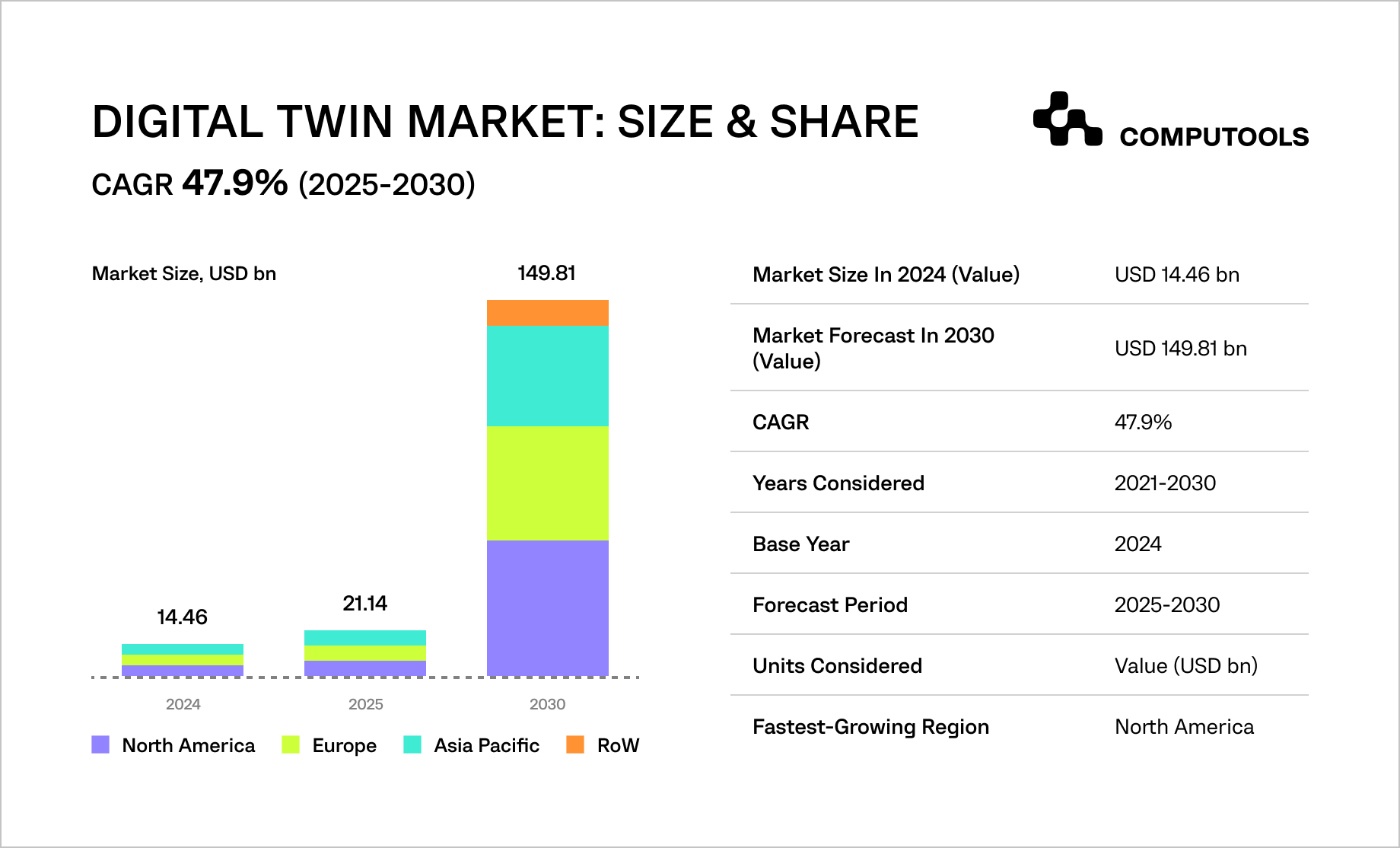
Companies investing in logistics software development services are already leveraging digital twins to simulate warehouse operations, improve automation planning, and optimize logistics workflows.
What is a warehouse digital twin?
A warehouse digital twin is a real‑time digital representation of a physical warehouse environment. It continuously collects and analyzes operational data to simulate warehouse activities and support decision‑making.
A digital twin integrates multiple systems, including:
- Warehouse Management Systems (WMS)
- robotics and automation platforms
- IoT sensors
- transportation management systems
- inventory databases
Together, these systems form a smart warehouse digital twin capable of visualizing and simulating warehouse operations. Unlike traditional reporting tools, digital twin warehouse management solutions allow companies to test operational changes before applying them in real-world environments.
Organizations often rely on logistics software development services to integrate these systems effectively and ensure that the digital twin can process data from multiple sources seamlessly.
For example, logistics teams can simulate new warehouse layouts, order picking strategies, automation deployment, and inventory placement optimization.
How digital twin technology works in warehouse operations
The implementation of digital twins in logistics operations relies on continuous synchronization between physical warehouse systems and their virtual counterparts.
By creating a dynamic, data-driven model of warehouse processes, companies can monitor operations in real time, predict potential issues, and optimize workflows before making changes in the actual environment.
This approach is a cornerstone of modern warehouse optimization with digital twin strategies and is increasingly integrated into broader supply chain digital twin technology initiatives.
The process typically involves four key components:
1. Data Collection
Operational data is gathered from multiple sources, including IoT sensors, barcode scanners, robotics systems, inventory tracking devices, and warehouse management platforms.
This enables real-time warehouse digital twin systems to accurately reflect current warehouse conditions. Organizations often leverage IoT development services to implement robust and scalable data collection frameworks.
2. Data Integration
Collected information is centralized into a unified platform that combines inventory, automation, and operational insights. Advanced analytics and AI tools process this data to generate actionable recommendations.
Integrating logistics software development services at this stage ensures that all systems communicate seamlessly, forming the backbone of a digital twin for warehouses.
3. Simulation and Modeling
Using warehouse simulation software, managers can model operational scenarios such as layout changes, workforce adjustments, peak demand strategies, and automation deployment.
This step allows teams to experiment with different approaches in a risk-free digital environment, significantly reducing downtime and operational errors.
4. Continuous Monitoring and Optimization
A digital twin for warehouse automation constantly synchronizes with physical operations, providing ongoing insights into equipment performance, inventory flow, and process efficiency.
By implementing digital transformation services, companies can continuously refine their warehouse operations, improve predictive maintenance, and make data-driven decisions that scale across the entire supply chain.
By following these steps, organizations can achieve higher efficiency, lower costs, and improved operational agility. Proper system integration ensures that digital twin platforms are aligned with existing workflows, while comprehensive software support facilitates the seamless adoption of these advanced technologies across the enterprise.
Picking the right technology partner is crucial for companies looking to build advanced logistics, warehousing platforms, or upgrade their transportation systems. Discover the Top 25 Logistics Software Development Companies in 2026.
Key benefits of warehouse digital twin for logistics
Organizations implementing digital twin for warehouses gain several strategic advantages that directly improve efficiency, cost management, and overall operational performance.
1. Operational visibility
A smart warehouse system provides a unified view of operations, allowing managers to monitor inventory movement, equipment performance, and workforce productivity. This improved visibility enables faster responses to operational issues and supports more informed decision-making.
2. Faster decision-making
With warehouse simulation software, companies can simulate operational changes before implementing them in the real warehouse. This allows teams to test new layouts, automation strategies, and workforce planning in a risk-free environment, reducing risks associated with process redesign or automation deployment.
3. Cost reduction
Simulation-driven optimization helps organizations lower operational expenses by identifying inefficiencies in logistics processes. According to McKinsey, implementing digital twins can reduce costs by 10–20%, making resource allocation more effective and improving ROI on automation investments.
4. Automation planning
Many companies use digital twin solutions to evaluate the impact of robotics and automated systems before deployment. By simulating various scenarios, businesses can forecast performance, estimate ROI, and ensure that automation investments deliver measurable benefits.
5. Supply chain resilience
By modeling potential disruptions, logistics teams can prepare for demand spikes, supplier delays, or operational bottlenecks. Real-time insights and predictive analytics enable warehouses to respond proactively, maintaining smooth operations even under challenging conditions.
Overall, implementing a warehouse digital twin not only enhances visibility, decision-making, and cost-efficiency but also strengthens the resilience and adaptability of the entire supply chain.
Companies often complement these technologies with logistics software development services to ensure seamless integration with existing warehouse systems and optimize workflows across the enterprise.
Practical use cases of digital twins in warehouses
Organizations across logistics and manufacturing industries leverage warehouse digital twin technology and logistics digital twin solutions to improve operational efficiency, reduce costs, and enhance decision-making.
By creating virtual replicas of physical warehouses, companies can test strategies, optimize workflows, and implement automation with minimal disruption.
1. Warehouse layout optimization
Using warehouse simulation software, companies can simulate different warehouse layouts to determine the most efficient placement of shelves, picking zones, and loading docks. This enables organizations to maximize storage space, streamline material flow, and improve overall productivity.
2. Workforce productivity analysis
A smart digital twin for warehouse automation can analyze worker movement patterns, identify inefficiencies in picking routes, and recommend optimized task assignments. By simulating employee workflows, managers can enhance labor utilization while minimizing delays in order fulfillment.
3. Predictive maintenance
Sensors integrated with real-time warehouse digital twin systems monitor equipment performance and detect abnormal behavior. This allows organizations to trigger maintenance alerts before issues escalate, reducing downtime and extending the lifespan of critical machinery.
4. Inventory optimization
Logistics digital twin solutions help optimize inventory placement and stock levels, ensuring faster order picking and fewer fulfillment delays. Companies can model demand fluctuations, evaluate replenishment strategies, and improve inventory turnover without affecting live operations.
By implementing these practical use cases, companies not only improve operational performance but also gain a foundation for scaling advanced digital capabilities.
Organizations frequently combine these solutions with logistics software development services and warehouse management software development to integrate digital twin systems with existing platforms, enhance predictive analytics, and achieve how to implement a warehouse digital twin for logistics optimization across their operations.
Leveraging these tools is a key step toward creating fully connected, automated, and resilient warehouse ecosystems.

Explore how digital twin technology can model inventory flows, workforce dynamics, and automation systems—request a technical assessment tailored to your logistics environment.
How to implement a warehouse digital twin for logistics optimization
Organizations exploring how to implement a warehouse digital twin for logistics optimization typically follow a structured, multi-step approach to ensure the system delivers real operational value.
Step 1. Evaluate current warehouse infrastructure
The first step involves a thorough assessment of existing warehouse systems and processes. Companies review their warehouse management platforms, automation equipment, material handling systems, and data collection infrastructure.
This evaluation helps identify gaps, redundancies, and areas where digitalization can have the most impact.
Step 2. Integrate operational data
A successful digital twin relies on seamless integration of data from multiple sources. This includes linking warehouse management systems, IoT devices, robotics, sensors, and analytics platforms.
Proper integration ensures that real-time data from every part of the warehouse is captured and synchronized, creating a reliable foundation for simulation and predictive modeling.
Step 3. Build the digital model
Once data integration is complete, engineers develop a virtual model of the warehouse environment. Using warehouse simulation tools, the model replicates storage layouts, workflows, equipment behavior, and operational constraints.
This digital replica serves as a testbed for experimenting with layout changes, workflow optimizations, and automation strategies without disrupting live operations.
Step 4. Implement analytics and AI
With the virtual model in place, companies apply advanced analytics and AI to analyze operational patterns, predict potential bottlenecks, and optimize processes.
Predictive maintenance, demand forecasting, and resource allocation models can all be tested and refined in the digital environment before being applied in the real warehouse, reducing risk and improving efficiency.
Step 5. Continuous monitoring and improvement
After deployment, the digital twin continues to operate in parallel with the physical warehouse, collecting real-time data to update the virtual model.
This ongoing feedback loop allows companies to continuously monitor performance, adjust workflows, and make data-driven decisions that improve operational efficiency over time.
By following this step-by-step approach, organizations can successfully implement a warehouse digital twin that not only optimizes current operations but also provides a platform for continuous improvement and long-term operational resilience.
Why companies choose Computools for logistics software development
Implementing advanced digital twin warehouse management systems and optimizing logistics operations requires deep expertise in software development, IoT integration, data analytics, and system design.
Computools provides end-to-end logistics software development services, helping companies build scalable, reliable, and flexible digital platforms for supply chain and warehouse management.
With over 12 years of expertise in the logistics industry, we have successfully delivered more than 50 logistics projects worldwide, including 10+ warehouse management solutions.
Our team of 250+ vetted engineers brings extensive experience across logistics, transportation, and maritime industries, enabling us to develop solutions tailored to each client’s unique operational challenges.
Computools is trusted by global brands such as Visa, Epson, IBM, Dior, Bombardier, and the British Council, and holds ISO 9001 and ISO 27001 certifications, ensuring high standards of quality and information security.
LOCARGO – Logistics Platform Transformation
For LOCARGO, a Texas-based B2B trucking and delivery marketplace, Computools developed a comprehensive logistics platform integrating IoT-based shipment tracking and AI-powered logistics optimization.
The platform allows freight operators, service providers, and drivers to coordinate transport efficiently, manage orders, and optimize route planning.
By leveraging real-time data and predictive algorithms, LOCARGO transformed its operations and achieved a fivefold increase in revenue within two years, demonstrating the tangible impact of smart logistics solutions.
Western-European Rail Operator – IoT Cargo Monitoring
A major Western-European rail operator partnered with Computools to implement a real-time cargo monitoring system. The platform collects continuous sensor data on cargo location, temperature, pressure, and volume, sending instant alerts for deviations from safety thresholds.
By improving visibility into cargo operations and reducing manual checks, the operator enhanced safety, efficiency, and fleet utilization.
This case exemplifies how real-time monitoring and digital twin for warehouse automation principles can be applied beyond traditional warehouses to optimize logistics workflows across industries.
Shipbuilding Management App
Computools also developed a digital platform for a UK-based maritime services company, providing tools for shipowners, shipbuilders, and customers. The solution included blockchain-based data security, analytics dashboards, and integrated management tools, enabling the client to streamline operations, improve transparency, and enhance overall productivity.
This project highlights our ability to design complex digital platforms that integrate multiple user types, security protocols, and analytics capabilities, reinforcing the versatility of digital twin solutions for supply chain and logistics applications.
By choosing Computools, companies gain a partner with proven expertise in building real-time warehouse digital twin systems, integrating IoT devices, applying advanced analytics, and supporting end-to-end digital transformation.
With 85+ client reviews on Clutch, our track record reflects consistent delivery and customer satisfaction. Our approach ensures that clients not only implement technology but also achieve measurable business results, operational efficiency, and long-term scalability in logistics operations.
Conclusion
As supply chains grow more complex and customer expectations continue to rise, companies need advanced technologies that provide greater visibility, flexibility, and operational control. Traditional warehouse management tools are often not enough to handle the increasing volume of data, automation systems, and real-time decision-making required in modern logistics environments.
A smart warehouse digital twin offers a powerful solution by creating a virtual representation of warehouse operations that continuously synchronizes with real-world data. This allows organizations to simulate workflows, analyze performance metrics, and identify operational bottlenecks before they affect real processes. By leveraging warehouse operations simulation, companies can experiment with new warehouse layouts, workforce strategies, and automation systems in a risk-free environment.
Beyond simulation, digital twins also support predictive analytics and proactive management. From equipment monitoring and predictive maintenance to strategic planning for robotics deployment, the technology enables organizations to optimize performance while minimizing operational disruptions. As warehouses increasingly adopt automation and connected devices, digital twins become an essential layer that integrates operational data and transforms it into actionable insights.
In the long term, the adoption of digital twin solutions for supply chain can significantly improve supply chain resilience, cost efficiency, and scalability. Organizations that invest in these technologies gain the ability to continuously optimize their logistics ecosystems, respond faster to market changes, and make data-driven decisions with greater confidence.
Ultimately, companies that embrace warehouse digital twin technology today are better positioned to build smarter, more efficient, and more resilient warehouse operations for the future.
Let’s explore ways to speed up your warehouse automation and help you stay ahead of the competition. Get in touch with us at info@computools.com.
Efficient load distribution relies heavily on intelligent route planning, enabling logistics companies to reduce travel distances and avoid delivery delays. Learn more in our article: Route Optimization Software: A Must-Have Tool for Modern Logistics Businesses.
Computools
Software Solutions
Computools is an IT consulting and software development company that delivers innovative solutions to help businesses unlock tomorrow.