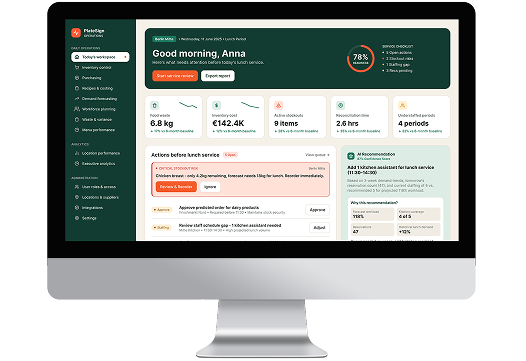
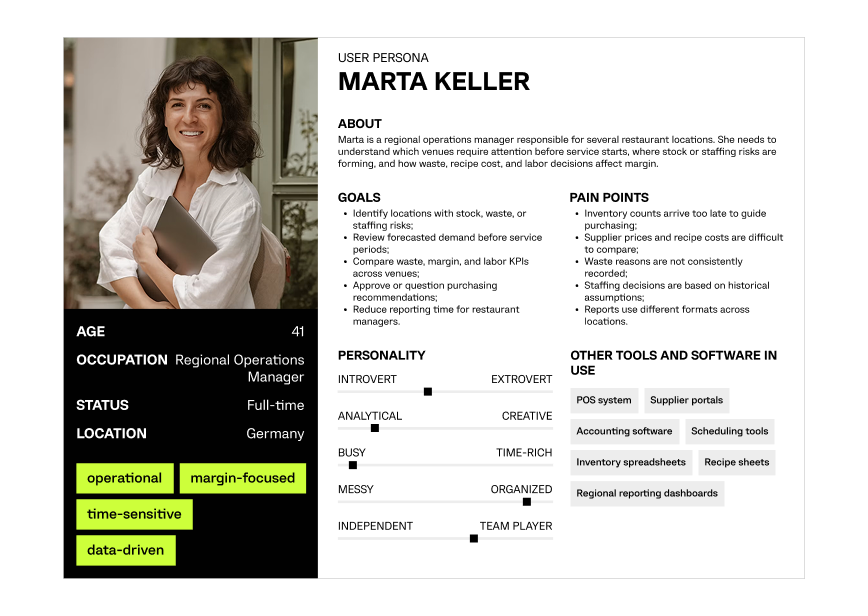
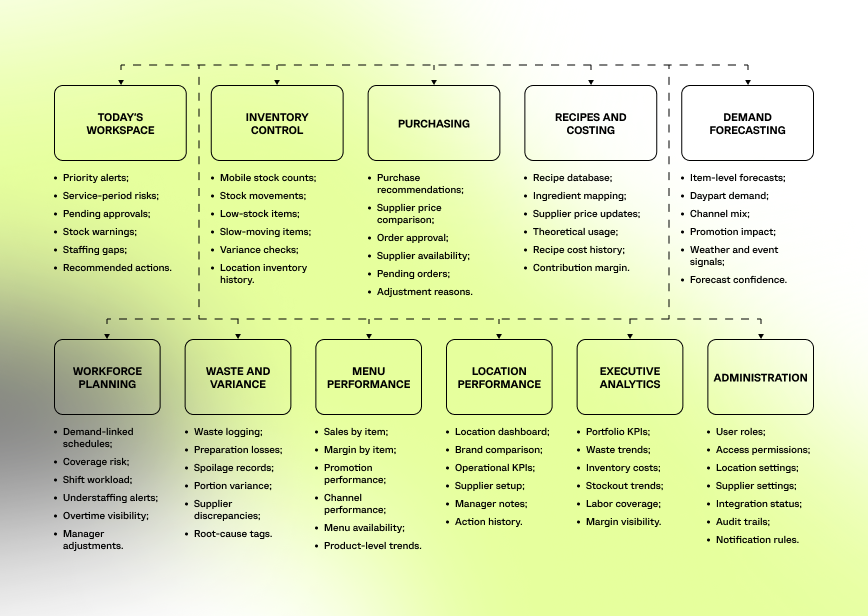
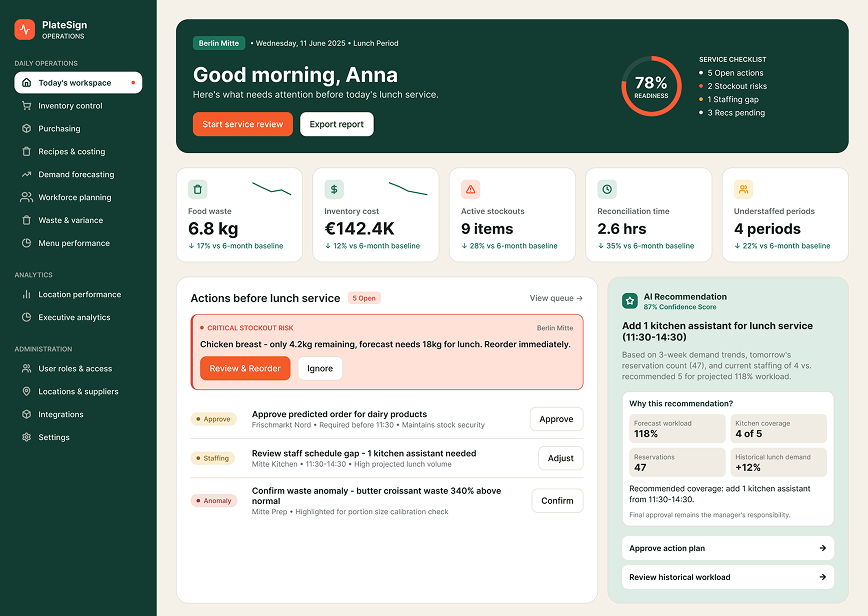
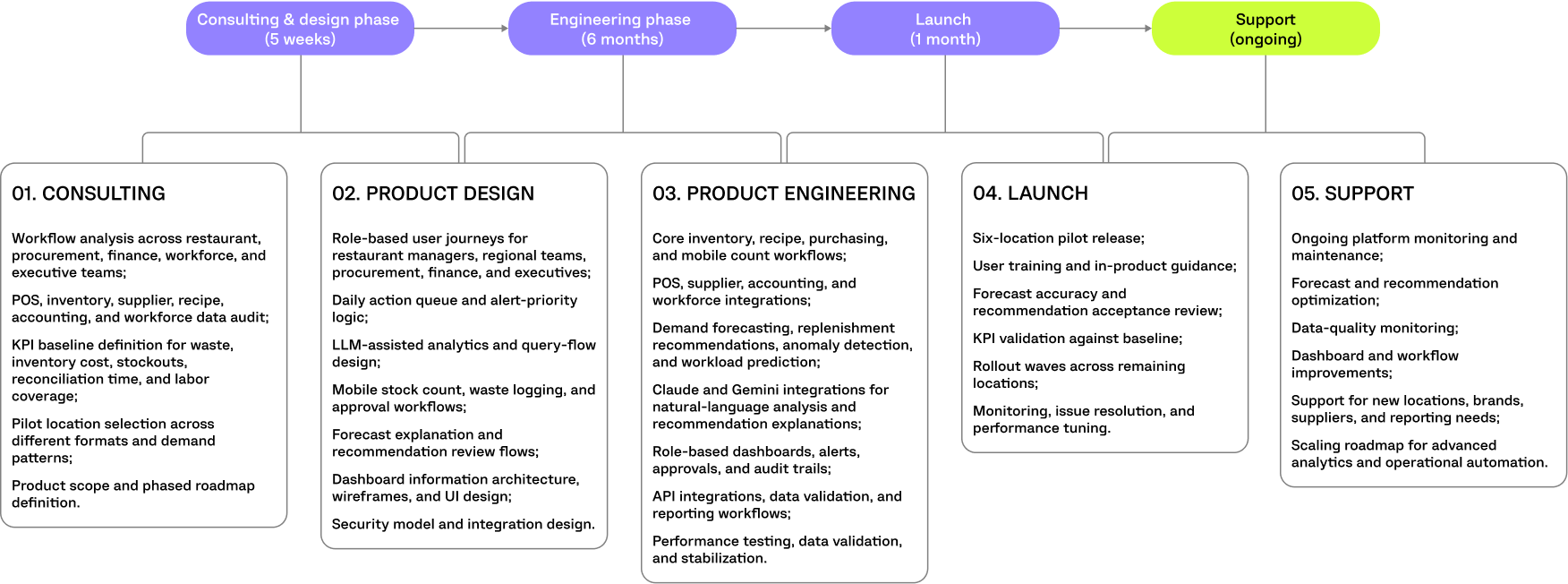
Computools designed PlateSign Operations as an AI restaurant operations platform for restaurant managers, regional operations teams, procurement, finance, and executives. The system connected POS, supplier, accounting, workforce, inventory, and recipe data into a shared operational model.
The shared operating model mapped menu items to recipes, ingredients, supplier prices, sales channels, stock movements, and labor demand. This gave teams a consistent view of how purchasing, preparation, staffing, and menu decisions affected waste, availability, and margin.
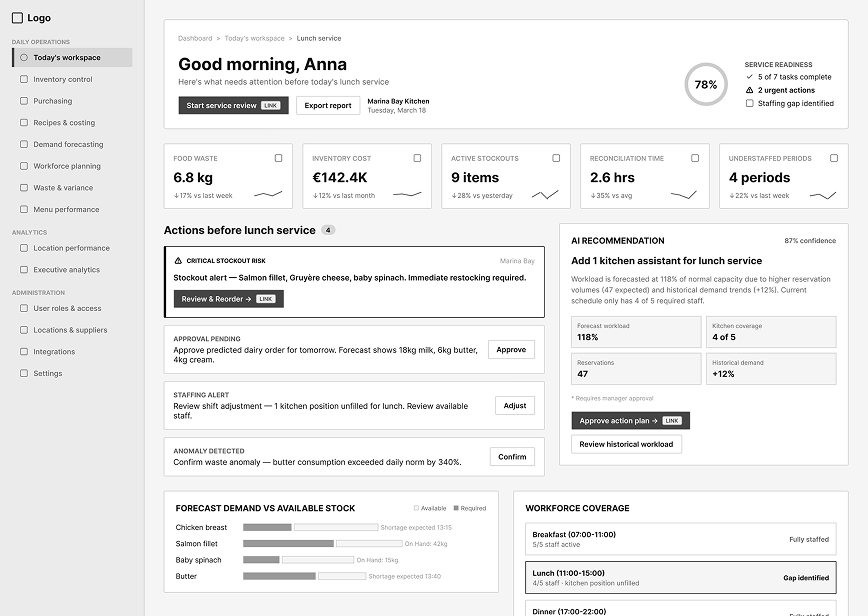
Machine-learning services powered restaurant demand forecasting software, replenishment recommendations, anomaly detection, and workload prediction using sales history, daypart patterns, channels, calendar events, promotions, weather, and location signals. Computools applied AI development to keep outputs explainable, reviewable, and controlled by restaurant managers, while Claude and Gemini integrations supported natural-language analysis and management-level queries over connected restaurant data.
Purchasing workflows supported restaurant purchasing automation by converting forecasted demand, stock levels, supplier prices, and recipe requirements into recommended purchase quantities by venue and ingredient. Managers could accept, adjust, or reject recommendations while keeping control over final orders.
PlateSign Operations also supported restaurant recipe cost management by linking recipes with ingredient usage, supplier price changes, theoretical consumption, physical counts, and contribution margin.
Waste logging, variance detection, and role-based dashboards helped managers identify losses, review operational KPIs, and act on recommendations before service. Leadership gained a consistent view of margin, waste, availability, and labor coverage across the group.